
Tech
Is Your Phone Data Harvested For Global Seismic Network


It’s a strange world when the device in your pocket that you use to argue with strangers on the internet, is also a highly effective scientific instrument. Yet, that’s exactly what Google has done, leveraging the world’s most popular mobile operating system, Android, to create a global earthquake warning system. Your smartphone is now moonlighting as an emergency beacon.
The system, aptly named the Android Earthquake Alerts (AEA) system, piggybacks on the accelerometers in over two billion devices worldwide. When a phone detects the fast-moving, relatively harmless P-waves of an earthquake, it sends a signal to Google’s servers. The servers then quickly triangulate the quake’s location and magnitude before firing out an alert to phones in the path of the slower, but much more destructive, S-waves. Potentially helping to save lives.
According to a recent study, the AEA system has captured over 11,000 quakes and issued more than 1,200 alerts across nearly 100 countries since 2021. Recently expanding access to earthquake warnings from 250 million people to a staggering 2.5 billion.
The Human Touch and a Note of Caution
While this tech is a godsend for places like California or Japan, the reality isn’t always as smooth as a Google press release. The system faced its biggest test during the devastating 2023 Turkey-Syria earthquake and, by Google’s own admission, it failed. The algorithm severely underestimated the magnitude of the 7.8 quake, sending its highest-level “Take Action” alert to a mere 469 people, while millions more in the affected area received a lower-tier warning that was easily missed.
This tragic miscalculation revealed a critical flaw, but it also became a powerful learning experience. Google has since updated its algorithms, and post-quake simulations showed that the improved system would have correctly sent urgent alerts to millions. This isn’t just a story about a tech failure; it’s about a corporation learning from its mistakes and, in a rare display of transparency, using that data to improve a life-saving tool.
The system is designed to supplement, rather than replace, official governmental warning systems. For us Canadians, who aren’t exactly sitting on a major fault line, our own federal system managed by Natural Resources Canada (NRCan) is the primary line of defense. But Google’s venture raises a larger question. In an age where tech giants command more resources and data than some nations, do governments risk becoming complacent, or is this the future of public safety, a partnership between public services and private innovation? It’s a debate we’ll likely be having for years to come.










Business
The “Holy Grail” of Energy? A BC Company Just Cracked the Code.
TLDR: BC-based General Fusion has hit a massive milestone, proving its unique “piston-powered” fusion tech works. This Canadian innovation is a practical, entrepreneurial leap towards limitless energy, side-stepping the costly, bureaucratic government projects.

It’s official the race for limitless, clean energy is no longer just a fantasy confined to massive, continent-spanning government projects. Canada has firmly planted its flag in the future.
In a stunning development for our nation’s tech sector, news outlets including the Carroll County Observer are reporting that a Canadian company is shattering expectations. General Fusion, a powerhouse innovator based in British Columbia, has reportedly hit a massive benchmark by generating approximately 600 million fusion neutrons per second.
This isn’t just another lab experiment. This is a fundamentally Canadian approach to one of humanity’s biggest challenges.
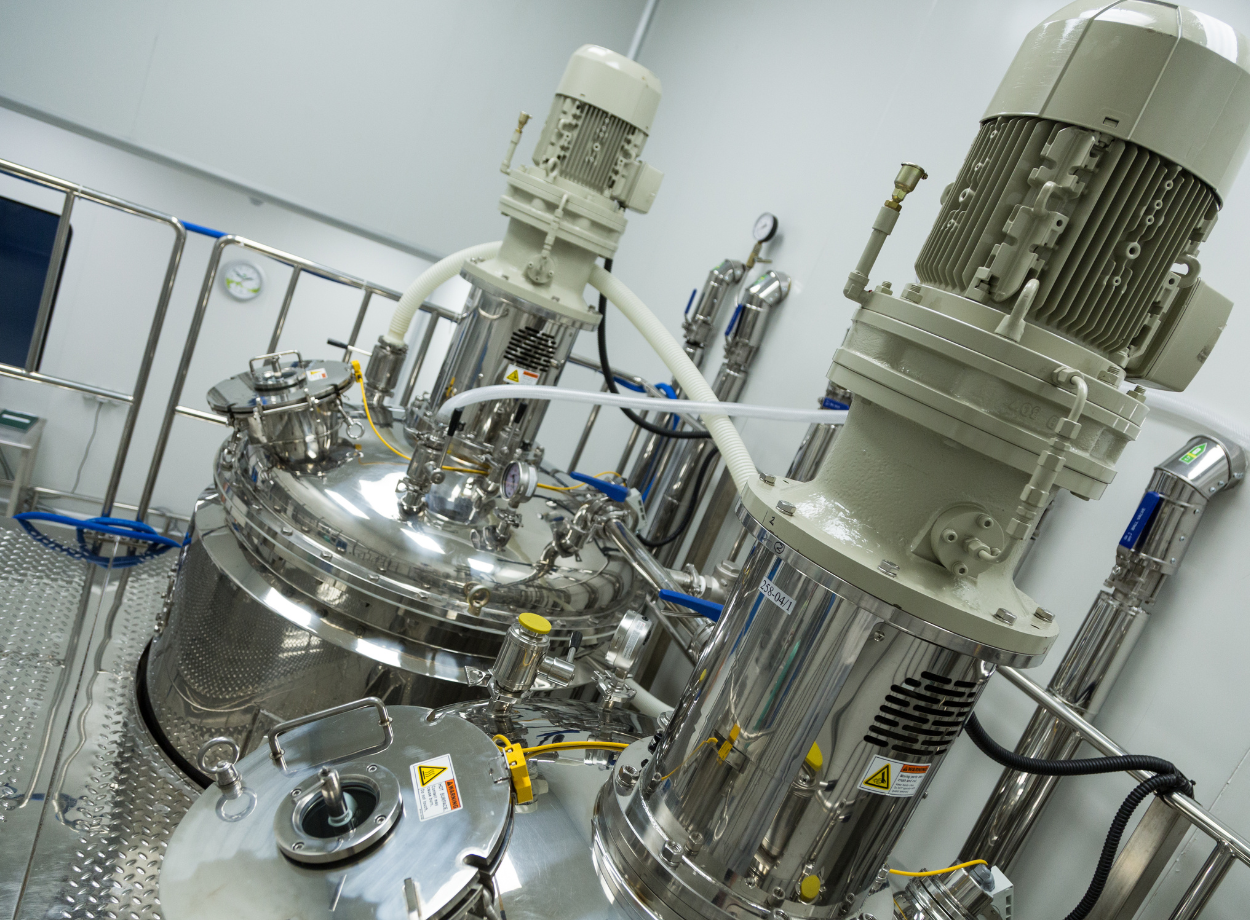
While other countries are pouring billions into massive, complex “tokamak” reactors—giant magnetic donuts that are notoriously difficult and expensive to build—General Fusion is doing it with brute-force ingenuity. Their system, called Magnetized Target Fusion or MTF, is pure industrial genius. It uses high-powered pistons to smash a liquid-metal liner, compressing a plasma to the point of fusion. It’s more garage-mechanic than government-bureaucrat, and it’s working.
This 600-million-neutron benchmark is a critical, world-first proof-of-concept for this specific technology. General Fusion has demonstrated the viability of its stable fusion process. It proves their unique, pulsed system can produce the goods, laying the foundation for their next-step machine.
This breakthrough is more than just a scientific curiosity. It’s a signal that Canada’s private sector is ready to lead the world in building the next generation of energy. This is the kind of disruptive, market-based solution we need to secure real energy independence.
While the world gets tangled in climate debates and unreliable green energy schemes, Canadian entrepreneurs are building the actual solution. This technology could one day power our cities, secure our national grid, and make Canada a global energy superpower for the next century. The future isn’t in windmills it’s in atoms. And Canada is figuring out how to harness them.
This is a massive win for Canadian tech, but is our government doing enough to support these national champions? Or should we be worried that this kind of disruptive power will be regulated to death before it ever gets a chance to change the world? Are we looking at the dawn of Canadian energy independence, or will we let this opportunity slip through our fingers?
Join us on X and Facebook to share your thoughts.
Sources
- Avery, Jackson. (2025, October 18). Canada Shatters World Record with 600 Million Neutrons per Second, Bringing Humanity Closer to the Dream of Controlled Nuclear Fusion. Carroll County Observer. https://carrollcountyobserver.com/2025/10/18/canada-shatters-world-record-with-600-million-neutrons-per-second-bringing-humanity-closer-to-the-dream-of-controlled-nuclear-fusion/
- General Fusion. (2024, November 22). General Fusion confirms significant fusion neutron yield and plasma stability during MTF compression experiment series with new peer-reviewed publication. https://generalfusion.com/post/general-fusion-confirms-significant-fusion-neutron-yield-and-plasma-stability-during-mtf-compression-experiment-series-with-new-peer-reviewed-publication/
- General Fusion. (2025, March 10). General Fusion’s Made-in-Canada Technology Achieves First Plasma in Cutting Edge Fusion Demonstration Machine. https://generalfusion.com/post/general-fusions-made-in-canada-technology-achieves-first-plasma-in-cutting-edge-fusion-demonstration-machine/
- Nuclear Engineering International. (2024, December 5). General Fusion achieves plasma breakthrough. https://www.neimagazine.com/news/general-fusion-achieves-plasma-breakthrough/
Business
This Canadian Startup Could Change Cancer Treatment Forever
Tatum Bioscience has created a scalable cancer vaccine using bioengineered nanofilaments that turn a patient’s tumor into an immune-stimulating agent. This “off-the-shelf” method is more efficient and affordable than personalized therapies, and the company is now fundraising for human clinical trials.
In a world where medical breakthroughs often come with astronomical price tags and logistical nightmares, a new approach is emerging from the heart of Canada. Tatum Bioscience, a Sherbrooke-based medtech startup, has unveiled a new kind of cancer vaccine that is not only showing incredible promise but is designed from the ground up to be flexible, efficient, and, most importantly, scalable.
The problem with many cutting-edge cancer vaccines is their reliance on a complex, personalized approach. These treatments, which are tailored to an individual patient’s unique tumor, are time-consuming and expensive to produce. The result is a therapy that, while effective, can be out of reach for many. Tatum Bioscience offers a nationalistic alternative, a made-in-Canada solution to a global problem.
Their technology, which uses bioengineered nanofilaments, represents a paradigm shift. Rather than creating a custom vaccine for each patient, Tatum’s approach turns the tumor itself into the source of the immune response. By physically attaching immunostimulatory molecules to cancer cells, the therapy transforms these rogue cells into targets, a process that can be applied across different types of cancer. This streamlined manufacturing process, which ingeniously uses bacteria as “miniature drug factories,” holds the key to widespread availability and could dramatically cut the time from diagnosis to treatment. This is the kind of modern, entrepreneurial spirit Canadians are known for.
The company, founded in 2019 by researchers from Université de Sherbrooke, has already raised $5.8 million from Quebec investors and is now looking for more funding to move to clinical trials with human patients. This is a critical next step, and the success of this project could put Canada on the map as a leader in next-generation cancer therapies. It is an exciting time for Canadian innovation, and companies like Tatum Bioscience are proving that when it comes to solving the world’s biggest problems, we are at the forefront.
Join us on X, Facebook, or Instagram and share your thoughts.
Sources
- Tatum Bioscience Makes Case for Scalable Cancer Vaccine – BetaKit, Madison McLauchlan, September 18, 2025. https://betakit.com/tatum-bioscience-makes-case-for-scalable-cancer-vaccine/
- Nanofilament immunotherapy induces potent antitumor vaccine responses – PubMed, Kevin Neil et al. https://pubmed.ncbi.nlm.nih.gov/40889802/


A group of world-class scientists, including Nobel Prize winners, has published a report asking their peers to, quite literally, stop what they’re doing. In a world obsessed with ‘disruption’ and ‘progress at all costs,’ this is a rare moment of collective caution. But that’s exactly what’s happening in the quiet, and increasingly spooky, world of synthetic biology.
The subject is “mirror life,” a hypothetical synthetic organism built from the mirror-image versions of the molecules that make up all life on Earth. For billions of years, life on our planet has been built from molecules with a specific chirality. These mirror organisms would be the exact opposite.
A Pandemic That Our Bodies Can’t See
So, what’s the big deal? A landmark December 2024 report in the journal Science outlined the risks. The core problem is that because mirror bacteria are, well, backwards, our immune systems wouldn’t recognize them. Our bodies’ defences are built like a lock-and-key system, with specific receptors designed to detect the molecules of invading pathogens. A mirror microbe would be like a key that fits no lock. It could replicate unchecked, causing lethal infections in humans, animals, and plants.
Even worse, these organisms would have no natural predators or competitors. They could become the ultimate invasive species, spreading through our ecosystems with no natural checks or balances. And no, a simple dose of antibiotics won’t work either. It’s a potential ecological and public health catastrophe on a scale that makes a regular pandemic look like a bad head cold.
The World Responds
Thankfully, this isn’t a problem we need to solve tomorrow. The technology to create a complete mirror organism is still at least a decade away. The good news is that the scientific community is already responding. Since the December report, meetings have been held and planned throughout 2025 at prestigious institutions worldwide, including the Institut Pasteur in Paris. The conversation is less about stopping science altogether and more about drawing a clear line in the sand.
Researchers are making the crucial distinction that they’re not against the use of mirror molecules for things like new pharmaceuticals, which could be more resistant to degradation in the body and offer new therapies for chronic diseases. They just believe that the creation of a self-replicating, autonomous mirror organism is a red line that should not be crossed. For them, the risk-reward ratio just doesn’t add up.
This dialogue is exactly what we need, and it’s a refreshing change from the usual “ask for forgiveness, not permission” mentality that defines so much of modern tech. It’s a prime example of global cooperation to address a potential threat before it even exists. Which is what this extremely significant discovery requires.



Unlocking the Canadian Defence Sandbox: How Quinte Innovators Can Use Speed and Local Muscle to Scale
TL;DR: Global defense is moving faster than government bureaucracy. The new Calian 100 million shared lab network gives Canadian startups...


The Ancient Superhighway: How a Tropical Drink Reached the Bay of Quite 2,000 Years Ago
TL;DR: Discover how 2,000-year-old pottery found in the St. Lawrence River reveals a massive prehistoric trade network. Ancient residents of...


From Trenton to Torino! The Quinte Skater Ready to Shock the World
TL;DR: Trenton’s Trennt Michaud has finally hit the Olympic ice in Italy with partner Lia Pereira. After a career-defining pivot...


Stop Grinding Alone: The Secret Support Network for Quinte Business Owners
TL;DR: Starting a business in the Bay of Quinte doesn't have to be a solo grind. Our region offers a...
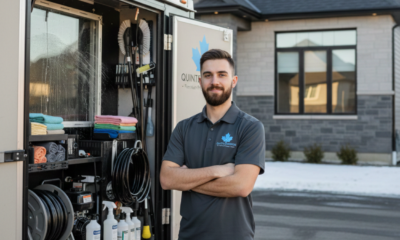

How to Get Free of the 9 to 5 and Get Rich From Common Chores
TL;DR: This step-by-step guide breaks down how to ditch the grind and build a high-revenue service empire in your own...


The Rail Revolution: Why Belleville Entrepreneurs Should Claim Their Ground Now
TL;DR: Alto is exploring a new southerly loop for its 300 km/h high-speed rail near Belleville. This multi-billion dollar shift...


The latest inductees into the Order of Canada has been released. We take a look at past Bay of Quinte inductees.
TL;DR: The 2026 Order of Canada inductees include pop culture icons like Nardwuar alongside Bay of Quinte legends who have...

6 Predictions for 2026: The Death of Job Hugging and the Rise of the Portfolio Professional
TL;DR: The Canadian dream is getting a massive update as we enter 2026. The traditional 9-to-5 is officially a legacy...


Is your Bay of Quinte property subject to Cowichan-style “clouded title”?
TL;DR: "Cowichan-style" property revolution could hit Ontario, specifically targeting the Bay of Quinte. For local homeowners and investors, the gold-standard...