
From Protest to Punch-Up
A viral video of a Canadian protest escalating into a violent brawl highlights the breakdown of civil discourse and the dangerous trend of political disagreements turning into physical confrontations.
Video by @RebelNewsOnline on YouTube









A recent viral video from Rebel News Online YouTube channel, taken while covering a recent demonstration, exposed a recent street brawl and a symptom of a deeper national sickness. This is a manifestation of the frustration felt by countless Canadians who feel their voices have been ignored. The raw footage reveals a reality that many are just beginning to acknowledge: our political disagreements are spilling over into the physical realm.

The video documents a chaotic scene where a protest escalates into a physical confrontation and an arrest. The most telling moments are the words exchanged. A torrent of profanity and insults reveals a chasm of mutual contempt. A protester is asked to explain their T-shirt emblazoned with the phrase, “die fascist die.” This scene forces a critical question: when a movement claims to oppose fascism, can its proponents justify physical aggression and a call to violence in the name of their cause? The footage suggests a double standard, where a commitment to anti-hate seems to give way to a willingness to engage in the aggression they claim to be fighting against.
This alarming event, underscored by the jarring sound of our national anthem playing amidst the chaos, is a wake-up call. It’s a lesson about the true cost of abandoning the principles of civil debate and peaceful assembly. As Canadians, we have long prided ourselves on our ability to navigate differences through dialogue and compromise. This video is a cautionary tale, a vivid reminder that when we allow our political passions to descend into violence, we not only betray the core values that define us but also erode the foundation of our free and democratic society. The path forward must be one of renewed commitment to free speech and mutual respect, or we risk further unraveling the very fabric of our nation.
Join us on X, Facebook, or Instagram and share your thoughts.
Sources
- @RebelNewsOnline on YouTube: Physical Attack and Arrest Caught on Camera in Canada





Business
Mechanics Are Drowning in Free Rubber and Smart Hustlers Are Making Millions
TL;DR: Ontario auto repair shops are getting crushed under massive piles of scrap tires due to slashed provincial recycling targets, leaving mechanics facing municipal fines for stockpiles they cannot legally dump. Here is how enterprising creators can turn this provincial breakdown into a negative-cost raw material goldmine across four high-margin business models.

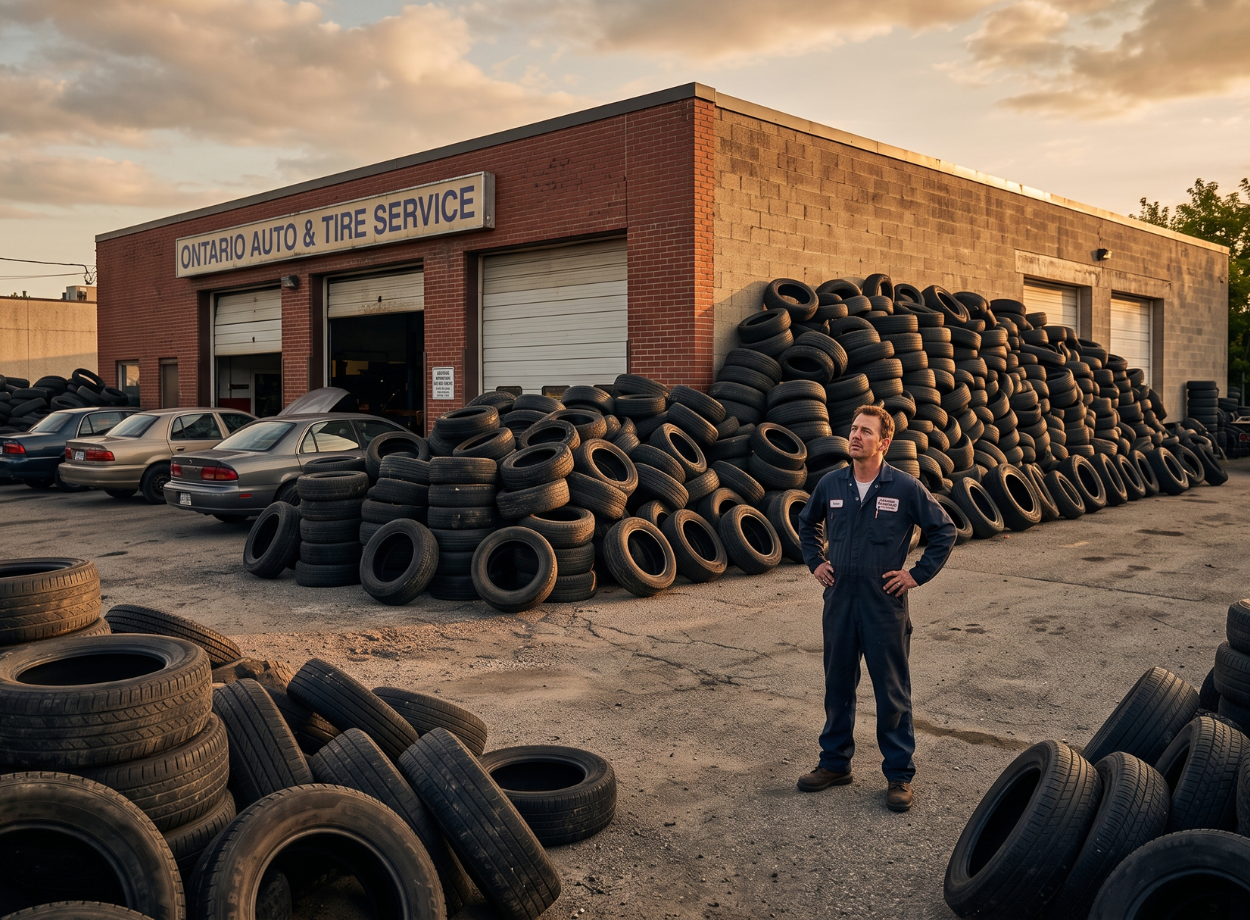
Across Ontario, local auto repair shops and tire dealers are facing a full-blown scrap tire emergency. Thousands of used tires are piling up in parking lots, service bays, and back alleys because collection haulers simply stopped showing up.
How did the province end up in this mess? Blame a quiet regulatory change under Ontario’s Resource Recovery and Circular Economy Act. The provincial government lowered mandatory recycling targets for Producer Responsibility Organizations from 85 percent down to 65 percent by weight. Once these big recycling entities hit their lowered quota, they lost every financial reason to keep paying haulers for additional pickups.
Drivers still hand over environmental fees for every tire at retail checkout counters. Consumers pay the fee, mechanics carry the physical burden, and local communities face serious fire hazards and mosquito breeding grounds. It represents an appalling failure of government policy that penalizes small business owners while letting large recycling organizations walk away.
Where provincial regulators see a disaster, modern creators see an absolute goldmine. Traditional manufacturing requires buying raw materials upfront. In a reverse supply chain, your suppliers actually pay you to haul away their inventory. You collect removal fees on the front end before you even begin processing or reselling on the back end.
This dual-revenue engine creates an unstoppable business model for ambitious Canadian hustlers. Here are four high-margin models ready to clean up Ontario while making serious money.
Model 1 – B2B Logistics and Removal Buffer
Initial Investment Level – Low
Approximate Time-to-Market – Immediate
You do not need expensive machinery or massive capital to launch right away. Independent mechanics are desperate for reliable haulage to stay clear of municipal fines. By offering a subscription retainer or charging two to five dollars per tire, you give auto shops immediate relief. You collect upfront removal fees, lease low-cost rural storage space, and aggregate high volumes until bulk industrial recyclers are ready to buy.
Model 2 – Physical Processing for Infrastructure and Turf
Initial Investment Level – Medium
Approximate Time-to-Market – 3 to 6 Months
With standard shredders and granulators, whole tires transform into valuable construction feedstocks. Basic processing produces Tire-Derived Aggregate, which sells for thirty to eighty dollars per ton for lightweight road sub-bases and retaining walls. Medium processing yields crumb rubber for synthetic sports turf and playground surfaces at up to four hundred dollars per ton. High-grade fine rubber powder commands premium rates up to six hundred dollars per ton for rubberized asphalt and commercial manufacturing.
Model 3 – Experiential Recreation Parks
Initial Investment Level – Low to Medium
Approximate Time-to-Market – 1 to 3 Months
You can bypass mechanical processing entirely by using whole tires as structural features. Paintball and airsoft arenas need tactical bunkers, sniper towers, and maze walls. Outdoor fitness grounds require obstacle courses, tire-flip lanes, and agility grids. You earn collection fees when sourcing the tires, then generate recurring consumer revenue through field admissions, group corporate events, and gear rentals.
Model 4 – High-Tech Thermal Pyrolysis
Initial Investment Level – High
Approximate Time-to-Market – 12+ Months
For well-capitalized operators, thermal decomposition breaks rubber down into core chemical elements without oxygen combustion. This process generates Tire Pyrolysis Oil for industrial fuel, recovered Carbon Black for commercial rubber manufacturing, and clean scrap steel for metal recyclers.
Waiting around for government bureaucrats to fix recycling quotas is a losing game. The provincial scrap tire backlog is a classic example of red tape creating a real-world market gap. Enterprising entrepreneurs have a massive opportunity to step in, collect cash on day one, and turn an environmental nightmare into a thriving circular enterprise.
Do you think the provincial government should immediately restore the old recycling targets, or should independent entrepreneurs take over the market and fix the crisis themselves? What creative business would you build out of a thousand free tires?
Business
Unlocking the Canadian Defence Sandbox: How Quinte Innovators Can Use Speed and Local Muscle to Scale
TL;DR: Global defense is moving faster than government bureaucracy. The new Calian 100 million shared lab network gives Canadian startups the ultimate sandbox to build military tech without the red tape. By combining hobbyist parts with local manufacturing powerhouses like the Quinte region small teams can build the next game changing drone before the big guys even finish their paperwork. Read on to find out how.
Global conflicts are shifting fast and legacy systems are out. Agility is everything today. Canada needs better integration for crucial priorities like Arctic security. The old procurement process is painfully slow and often leaves brilliant ideas stuck in bureaucratic limbo. We need a rebellion against the old guard.
Enter the Calian Group and Calian VENTURES. They are setting up a 100 million cross-country defense lab network. This fund is a massive toolkit. It opens up the sandbox for agile Canadian entrepreneurs to build domestic tech faster than ever. That means combining speed with modified tech and local manufacturing muscle.
The 100 Million Key Access Integration and the End of Isolation
The Calian initiative is completely changing the game. They are building a physical C5ISRT ecosystem. C5ISRT stands for Command Control Communications Computers Cyber Intelligence Surveillance Reconnaissance and Targeting.
This shared lab model destroys a huge barrier to entry. Small teams no longer need to build multimillion-dollar testing ranges. They can plug prototypes straight into a NATO-ready environment. The real magic here is integration over pure innovation. We do not always need a brand new invention. We just need existing tools to talk to each other across land air sea and cyber domains. Canadian tech often focuses too much on software apps. Real hardware integration is the untapped goldmine and these shared labs are the picks and shovels.
The Blueprint ALM Meca and the Art of the Out of Nowhere Success
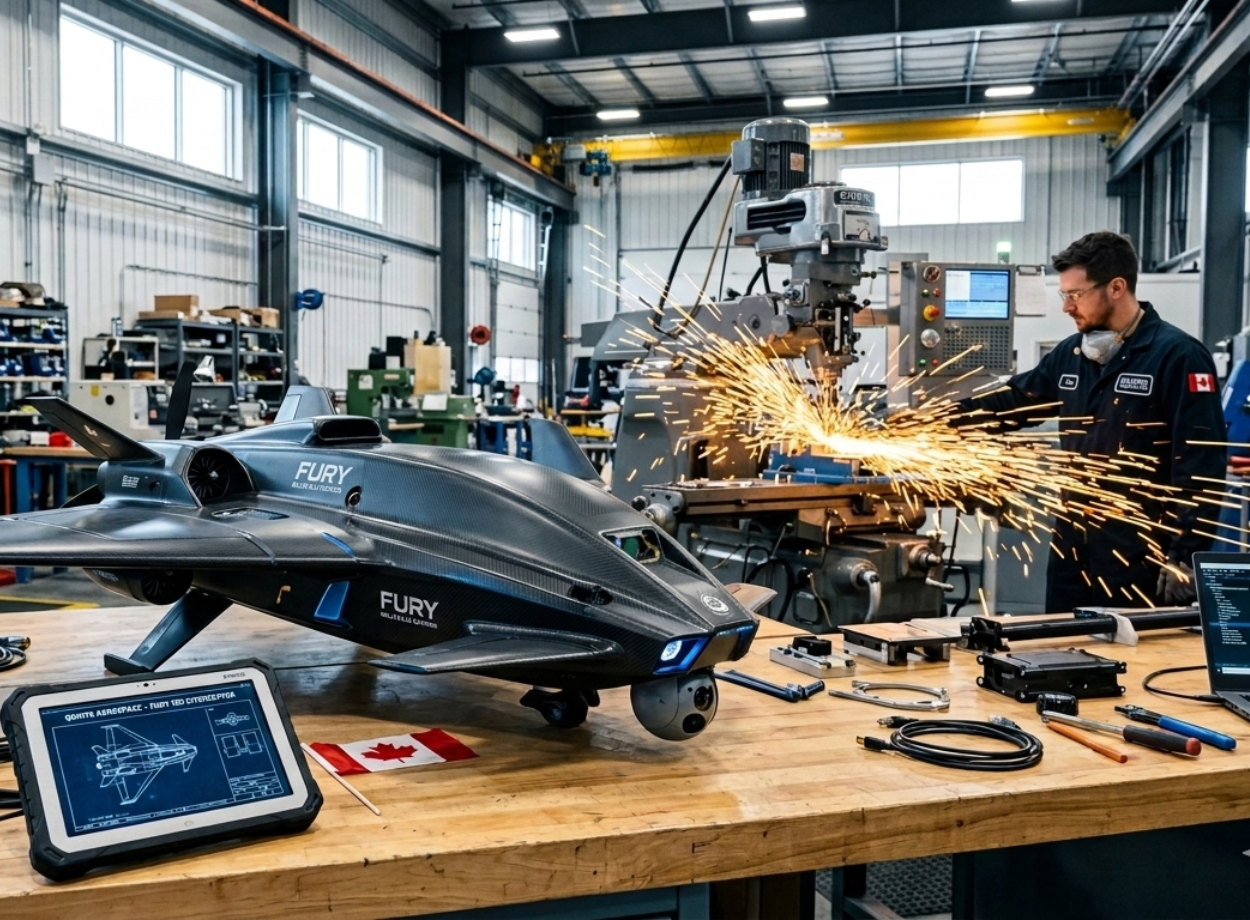
Look at ALM Meca as the perfect case study. They are a small 17 person precision machining company in France. They built the Fury 120 interceptor drone completely under the radar.
They bootstrapped the whole thing with zero initial government funding or venture capital. They kept their intellectual property and moved at their own pace. Their genius move was using custom precision machined micro turbojets. These are engines popularized by remote control jet hobbyists rather than expensive military hardware. They focused on pure speed to defeat cheap loitering munitions. The drone hits 700 kilometers per hour and they built it in under a year.
Garage tinkerers and local machine shops are the new defense contractors. Being outside the prime contractor system gives small companies a massive advantage. They can embrace radical low cost thinking that huge defense giants simply cannot execute quickly.
Translating the Model The Quinte Region and the Local Loop Advantage
We can do this right here in Ontario. The Quinte region and Belleville are manufacturing powerhouses. We have serious advanced manufacturing sectors with strong machining electronics and materials supply chains. We also have great innovation resources at places like Loyalist College.
Belleville is a sleeping giant of advanced manufacturing just waiting for tech startups to knock on the door. We need to create a local loop. Imagine an agile aerospace startup teaming up with a Belleville manufacturing shop. Instead of waiting years for a massive prime contract they build a high performance prototype fast and locally. They use modified high tech or hobby tech components just like ALM Meca.
Actionable Steps for Quinte Entrepreneurs
Here is the playbook for Quinte entrepreneurs.
First, identify the niche. Focus on specific sub problems. Build secure data links for existing drones or ruggedized edge sensors.
Second, build the agile consortium. Match local tech talent with local manufacturing capacity.
Third, minimize dependence and maximize speed. Bootstrap a minimum viable product to prove your capability before chasing massive funding.
Fourth, target the shared labs. Use your local prototype to prove you have what it takes and then plug into the Calian shared lab network for final validation instead of waiting for a general contract.
Seizing the Sovereign Opportunity
The Calian funding provides the access. ALM Meca proves outsiders can win. Quinte manufacturing is ready to deploy. Defense innovation is a sprint right now and the biggest barrier is a slow mindset rather than a lack of capital. Quinte operators have the tools to build sovereign Canadian defense tech and completely change the game.
What do you think? Are local innovators ready to bypass the red tape and start building? Can Belleville become the next hub for agile defense tech?
Canada
Ottawa Sinks Free Boating: New $24 Fee and 5-Year Renewal Cycle Hits Quinte Waters
TL;DR: Transport Canada has ended the era of free, lifetime pleasure craft licences, introducing a mandatory five-year renewal cycle and a $24 fee effective immediately. The new regulations also force existing lifetime licence holders to transition to the new system by specific deadlines and will expand licensing requirements to wind-powered vessels over six metres by 2027.

Just when we thought we could look forward to a worry-free summer on the Bay of Quinte, Ottawa has decided to drop a new anchor on our wallets.
As of December 31, 2025, Transport Canada has quietly overhauled the Pleasure Craft Licence (PCL) program, effectively ending the era of the “lifetime” boat licence. If you own a vessel with a motor of 10 horsepower or more, the days of a one-and-done registration are over.
For the first time, Canadian boaters are being hit with a $24 fee to issue, renew, transfer, or replace a pleasure craft licence.
While twenty-four bucks might not break the bank for everyone, it is the principle that stings. For decades, licensing your boat was a free, administrative formality—a “thank you” for registering your vessel for safety purposes. Now, it looks suspiciously like another revenue stream flowing directly from our docks to the federal coffers.
The “Lifetime” Licence Myth
Perhaps the most frustrating part of this rollout is the retroactive nature of the changes. If you are sitting on a “lifetime” licence issued years ago, believing you were grandfathered in, think again.
Transport Canada has set a strict schedule to phase out these older licences. For example, if your licence was issued before 1985, it expires in 2026. This forces responsible boat owners, who followed the rules years ago, to jump back through the bureaucratic hoops and pay the new toll.
Sailors, You Are Next
The net is being cast wider, too. Our sailing community on the Trent-Severn and out in the open Bay isn’t safe from the regulator’s reach. Starting December 31, 2027, wind-powered pleasure craft over six metres in length will also require a licence.
This is a massive shift for sailing purists who have traditionally operated outside of these specific motor-vessel regulations.
Red Tape on the Rideau
To add insult to injury, the government has tightened the leash on reporting. You now have a mere 30 days to update your information if you move or change your name, slashed from the previous 90-day window.
They claim this is about “safety,” “accountability,” and managing abandoned vessels. But let’s be honest: does charging a fee and forcing paperwork every five years actually make the water safer? Or does it just create a larger pile of paper in Ottawa and a lighter wallet in Belleville?
For a region that thrives on waterborne tourism and recreation, adding friction to boat ownership is a wet blanket we didn’t ask for. We should be encouraging people to explore the waterways, not nickeling-and-diming them for the privilege.
Is this truly about cleaning up our waterways, or is it just another tax on the Canadian summer?
Join us on X and Facebook to share your thoughts.


Mechanics Are Drowning in Free Rubber and Smart Hustlers Are Making Millions
TL;DR: Ontario auto repair shops are getting crushed under massive piles of scrap tires due to slashed provincial recycling targets,...

Unlocking the Canadian Defence Sandbox: How Quinte Innovators Can Use Speed and Local Muscle to Scale
TL;DR: Global defense is moving faster than government bureaucracy. The new Calian 100 million shared lab network gives Canadian startups...


The Ancient Superhighway: How a Tropical Drink Reached the Bay of Quite 2,000 Years Ago
TL;DR: Discover how 2,000-year-old pottery found in the St. Lawrence River reveals a massive prehistoric trade network. Ancient residents of...


How To Escape The Feast Or Famine Trap In Local Contracting
TL;DR: Most home service businesses are trapped on a financial roller coaster because they sell one-off fixes. By pivoting to...
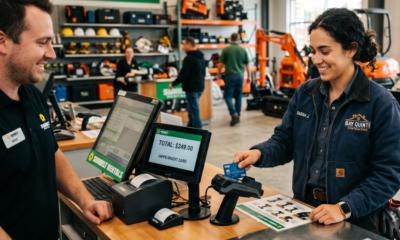

How Rented Equipment Can Bankroll Your Belleville Summer
TL;DR: Spring has sprung in the Quinte region and homeowners are desperate to fix their messy yards. We break down...


Stop Grinding Alone: The Secret Support Network for Quinte Business Owners
TL;DR: Starting a business in the Bay of Quinte doesn't have to be a solo grind. Our region offers a...
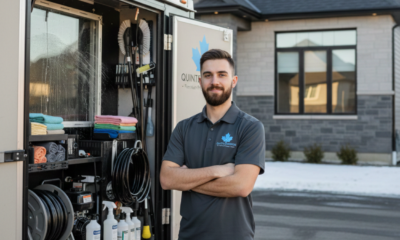

How to Get Free of the 9 to 5 and Get Rich From Common Chores
TL;DR: This step-by-step guide breaks down how to ditch the grind and build a high-revenue service empire in your own...


The latest inductees into the Order of Canada has been released. We take a look at past Bay of Quinte inductees.
TL;DR: The 2026 Order of Canada inductees include pop culture icons like Nardwuar alongside Bay of Quinte legends who have...


6 Predictions for 2026: The Death of Job Hugging and the Rise of the Portfolio Professional
TL;DR: The Canadian dream is getting a massive update as we enter 2026. The traditional 9-to-5 is officially a legacy...
-

 Local7 months ago
Why Brighton’s Hallie Clarke is the Most Dangerous Woman on Ice This Valentine’s Day
-

 Local7 months ago
From Trenton to Torino! The Quinte Skater Ready to Shock the World
-
History6 months ago
The Ancient Superhighway: How a Tropical Drink Reached the Bay of Quite 2,000 Years Ago
-
Business6 months ago
Unlocking the Canadian Defence Sandbox: How Quinte Innovators Can Use Speed and Local Muscle to Scale
-
Business4 months ago
How Rented Equipment Can Bankroll Your Belleville Summer
-
Business1 month ago
How To Escape The Feast Or Famine Trap In Local Contracting
-
Business4 weeks ago
Mechanics Are Drowning in Free Rubber and Smart Hustlers Are Making Millions
-

 Small Business4 weeks ago
Local Shops and Events Organizers are Being Shamed for Using Ai