
Business
How Belleville Could Help Build Canada’s New Auto Industry
TL;DR: Canada can launch a profitable domestic car brand by adopting the “Edison Motors” model of using off-the-shelf parts and decentralized manufacturing. Instead of building massive new factories, a startup could leverage existing suppliers and manufacturers in places like Belleville, Ontario to build a rugged and repairable national vehicle.


Could a startup domestic auto brand spawn outside of boardroom presentations and government committees? The future of the Canadian car industry likely isn’t happening in a glossy office tower in Toronto. A muddy lot in British Columbia where a guy named Chace Barber decided he was tired of waiting for Elon Musk might give a promising hint at the hidden potential future for Canadian automobile manufacture.

Barber is the founder of Edison Motors. He is a trucker who got sick of broken promises from big tech companies so he went to his parents’ backyard in Merritt and built his own electric logging truck. He didn’t ask for permission. He didn’t wait for a billion-dollar federal grant. He just started welding.
Now, Edison is breaking ground on a new manufacturing facility in Golden, BC. They aren’t trying to build 100,000 units in year one to please Wall Street. They are aiming for a realistic, profitable run of 100 trucks in 2026. They are building them for loggers and oil patch workers who can’t afford a battery that dies in -30°C weather.
But the real game-changer is the “Edison Pickup Kit.” Barber knows that not everyone needs a semi-truck, but everyone wants to stop burning cash at the pump. They are finalizing a “drop-in” diesel-electric conversion kit that can turn your existing heavy-duty Ford or Dodge pickup into a hybrid powerhouse. It’s the ultimate recycling program: keep your old truck’s body, gut the tired engine, and install a modern electric drivetrain that generates its own power. It is brilliant, it is anti-obsolescence, and it is exactly the kind of innovation that carries the day.
This is the energy we need to bottle.
Building a car company doesn’t have to require the GDP of a small nation. We don’t need massive factories and years of red tape. Edison Motors proves that. Barber’s philosophy is “Right to Repair.” He uses off-the-shelf parts that any mechanic can fix. He sources axles and generators that already exist and integrates them into a better machine.
The “Edison Model” is the blueprint for a mass-market Canadian car.
We have the supply chain ready to go. The brains are in Waterloo and the manufacturing muscle is already humming in places like Belleville, Ontario.
Belleville could play a large part in this story. It is home to Magna Lighting (operating as Autosystems) on Jamieson Bone Road where they are building world-class lighting components for global brands. It has precision shops like Stegg Limited that can machine complex parts to aerospace and automotive standards. The industrial parks along the 401 in Belleville are packed with fabricators who know how to build things that last.
We don’t need to build a new Gigafactory when we can just connect the dots. Imagine a rugged Canadian SUV conceived in Canada and assembled with parts, components and stamped metal from the Quinte region.
It creates a vehicle that is simple and tough. It uses a standard chassis. It uses reliable suspension. It doesn’t have a proprietary charging port that requires a master’s degree to fix. It is built by us for us.
The government attempt to solve our economic problems with committees and studies. They want try to lure foreign giants with tax breaks. But the real solution is staring us in the face. It looks like a guy in a flannel shirt building a truck because nobody else would do it right.
We don’t need another branch plant. We need a a few more Chace Barbers backed by our own talent and resources.
Are you tired of cars that you can’t fix yourself? Would you buy a car conceived and built in Canada with off the shelf parts?





Business
Unlocking the Canadian Defence Sandbox: How Quinte Innovators Can Use Speed and Local Muscle to Scale
TL;DR: Global defense is moving faster than government bureaucracy. The new Calian 100 million shared lab network gives Canadian startups the ultimate sandbox to build military tech without the red tape. By combining hobbyist parts with local manufacturing powerhouses like the Quinte region small teams can build the next game changing drone before the big guys even finish their paperwork. Read on to find out how.
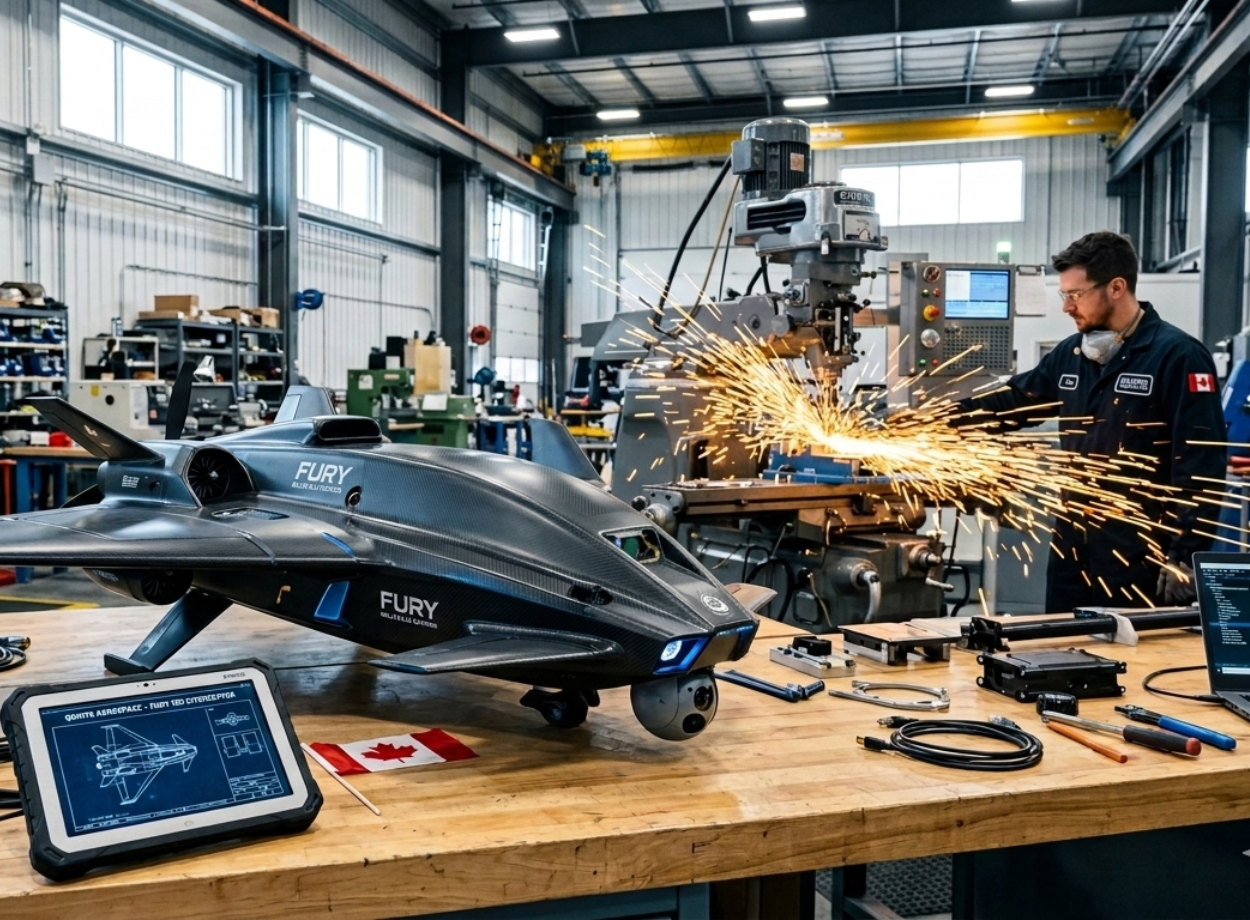
Global conflicts are shifting fast and legacy systems are out. Agility is everything today. Canada needs better integration for crucial priorities like Arctic security. The old procurement process is painfully slow and often leaves brilliant ideas stuck in bureaucratic limbo. We need a rebellion against the old guard.
Enter the Calian Group and Calian VENTURES. They are setting up a 100 million cross-country defense lab network. This fund is a massive toolkit. It opens up the sandbox for agile Canadian entrepreneurs to build domestic tech faster than ever. That means combining speed with modified tech and local manufacturing muscle.
The 100 Million Key Access Integration and the End of Isolation
The Calian initiative is completely changing the game. They are building a physical C5ISRT ecosystem. C5ISRT stands for Command Control Communications Computers Cyber Intelligence Surveillance Reconnaissance and Targeting.
This shared lab model destroys a huge barrier to entry. Small teams no longer need to build multimillion-dollar testing ranges. They can plug prototypes straight into a NATO-ready environment. The real magic here is integration over pure innovation. We do not always need a brand new invention. We just need existing tools to talk to each other across land air sea and cyber domains. Canadian tech often focuses too much on software apps. Real hardware integration is the untapped goldmine and these shared labs are the picks and shovels.
The Blueprint ALM Meca and the Art of the Out of Nowhere Success
Look at ALM Meca as the perfect case study. They are a small 17 person precision machining company in France. They built the Fury 120 interceptor drone completely under the radar.
They bootstrapped the whole thing with zero initial government funding or venture capital. They kept their intellectual property and moved at their own pace. Their genius move was using custom precision machined micro turbojets. These are engines popularized by remote control jet hobbyists rather than expensive military hardware. They focused on pure speed to defeat cheap loitering munitions. The drone hits 700 kilometers per hour and they built it in under a year.
Garage tinkerers and local machine shops are the new defense contractors. Being outside the prime contractor system gives small companies a massive advantage. They can embrace radical low cost thinking that huge defense giants simply cannot execute quickly.
Translating the Model The Quinte Region and the Local Loop Advantage
We can do this right here in Ontario. The Quinte region and Belleville are manufacturing powerhouses. We have serious advanced manufacturing sectors with strong machining electronics and materials supply chains. We also have great innovation resources at places like Loyalist College.
Belleville is a sleeping giant of advanced manufacturing just waiting for tech startups to knock on the door. We need to create a local loop. Imagine an agile aerospace startup teaming up with a Belleville manufacturing shop. Instead of waiting years for a massive prime contract they build a high performance prototype fast and locally. They use modified high tech or hobby tech components just like ALM Meca.
Actionable Steps for Quinte Entrepreneurs
Here is the playbook for Quinte entrepreneurs.
First, identify the niche. Focus on specific sub problems. Build secure data links for existing drones or ruggedized edge sensors.
Second, build the agile consortium. Match local tech talent with local manufacturing capacity.
Third, minimize dependence and maximize speed. Bootstrap a minimum viable product to prove your capability before chasing massive funding.
Fourth, target the shared labs. Use your local prototype to prove you have what it takes and then plug into the Calian shared lab network for final validation instead of waiting for a general contract.
Seizing the Sovereign Opportunity
The Calian funding provides the access. ALM Meca proves outsiders can win. Quinte manufacturing is ready to deploy. Defense innovation is a sprint right now and the biggest barrier is a slow mindset rather than a lack of capital. Quinte operators have the tools to build sovereign Canadian defense tech and completely change the game.
What do you think? Are local innovators ready to bypass the red tape and start building? Can Belleville become the next hub for agile defense tech?
Business
Stop Grinding Alone: The Secret Support Network for Quinte Business Owners
TL;DR: Starting a business in the Bay of Quinte doesn’t have to be a solo grind. Our region offers a “one-stop shop” at the Quinte Business Development Centre and other dedicated local partners to provide everything from micro-grants to industrial scaling support.

A Local Entrepreneur’s Guide to the Bay of Quinte Support System
Starting a business in Belleville or the County can feel like a solo mission. That “lone wolf” energy might fuel your late-night hustle but it is often a fast track to burnout. The reality is that the Bay of Quinte region sits on a goldmine of resources that most Ontario entrepreneurs would envy. We have a literal “one-stop shop” at the Quinte Business Development Centre that acts as a cheat code for local growth.
If you are trying to do everything yourself you are likely leaving money and mentorship on the table. Here are the five partners you need in your phone right now.
1. The Strategy Partner: The Small Business Centre (SBC)
Think of the SBC as your business therapist and coach rolled into one. They are the first stop for anyone asking how to actually turn an idea into a reality.
- The Goods: They offer free one-on-one counseling that helps you stop guessing.
- The Hook: The Starter Company Plus program is legendary around here for providing micro-grants that move the needle.
- Next Gen: They even run the Summer Company program for student bosses.
2. The Funding Partner: Trenval & PELA CFDC
Big banks can be cold and they often hate risk. Trenval and PELA CFDC are Community Futures Development Corporations that actually care about local community impact.
- The Vibe: They look at the person and the community benefit rather than just a credit score.
- Flexibility: They offer loans for startups and expansions when traditional lenders say “not yet”.
- Focus: They often have specific financing for youth or women entrepreneurs which is a total game changer.
3. The Growth Partner: Quinte Economic Development Commission (QEDC)
When you are ready to stop being a “small” business and start being a “big” player the QEDC steps in.
- Talent: Their Work in Quinte initiative helps you find the local rockstars you need to hire.
- Scaling: They focus on the industrial and manufacturing backbone of the region.
- Space: If you need land or a massive facility they are the ones with the keys to the kingdom.
4. The Community Partner: Local Chambers of Commerce
The Chambers in Belleville, Quinte West, and PEC are your social lifeline.
- The Tribe: Their networking events are where the real deals happen.
- Voice: They handle the boring political advocacy so you can focus on your craft.
- Credibility: Having that Chamber decal in your window signals to local customers that you are a legitimate part of the community fabric.
5. The Specialized County Partner: PEC Economic Development
The County is a different beast with specific rules and a heavy focus on tourism.
- Zoning: They help you navigate the municipal red tape that can kill a project.
- Support: They equip entrepreneurs with the data needed to evaluate opportunities for expansion or request loans.
- Focus: This is the go-to for anyone in hospitality, arts, or agriculture looking to make it in PEC.
The “hustle culture” narrative tells us that asking for help is a sign of weakness. In the Bay of Quinte that mindset is actually a competitive disadvantage. Why struggle with a business plan for three weeks when the SBC can help you polish it in an afternoon?
Our region’s biggest strength is its interconnectedness. Most of these offices are literally in the same building at Loyalist College. We should be leaning into the “Small Town, Big Support” angle. My take is that the “Starter Company Plus” grant is the most underutilized tool in our region. We need to encourage more people to stop gatekeeping their own ideas and start talking to these experts.
The Pro Tip: Reach out when things are going well. If you wait until you are in a crisis to call Trenval you are already behind the eight ball. These organizations want to fuel your rocket ship not just fix your flat tire.
How to Start: Go to a Small Business Centre workshop this month or hit up the next Chamber networking night. Just show up.
Join us on X and Facebook to share your thoughts.
Sources
- Small Business Centre: http://smallbusinessctr.com
- Trenval CFDC: trenval.ca
- PELA CFDC: pelacfdc.ca
- Quinte Economic Development Commission: quintedevelopment.com
- Prince Edward County Economic Development: thecounty.ca/business
- Belleville Chamber of Commerce: bellevillechamber.ca
- Work in Quinte: workinquinte.ca
- Quinte West Chamber of Commerce: quintewestchamber.ca
- Prince Edward County Chamber of Commerce: pecchamber.com
- Quinte Business Development Centre: qbdc.ca
Business
How to Get Free of the 9 to 5 and Get Rich From Common Chores
TL;DR: This step-by-step guide breaks down how to ditch the grind and build a high-revenue service empire in your own backyard. From “poop-scooping” cash flow to high-end exterior restoration, learn how to systemize the “dirty” jobs that Canadian homeowners are desperate to outsource.
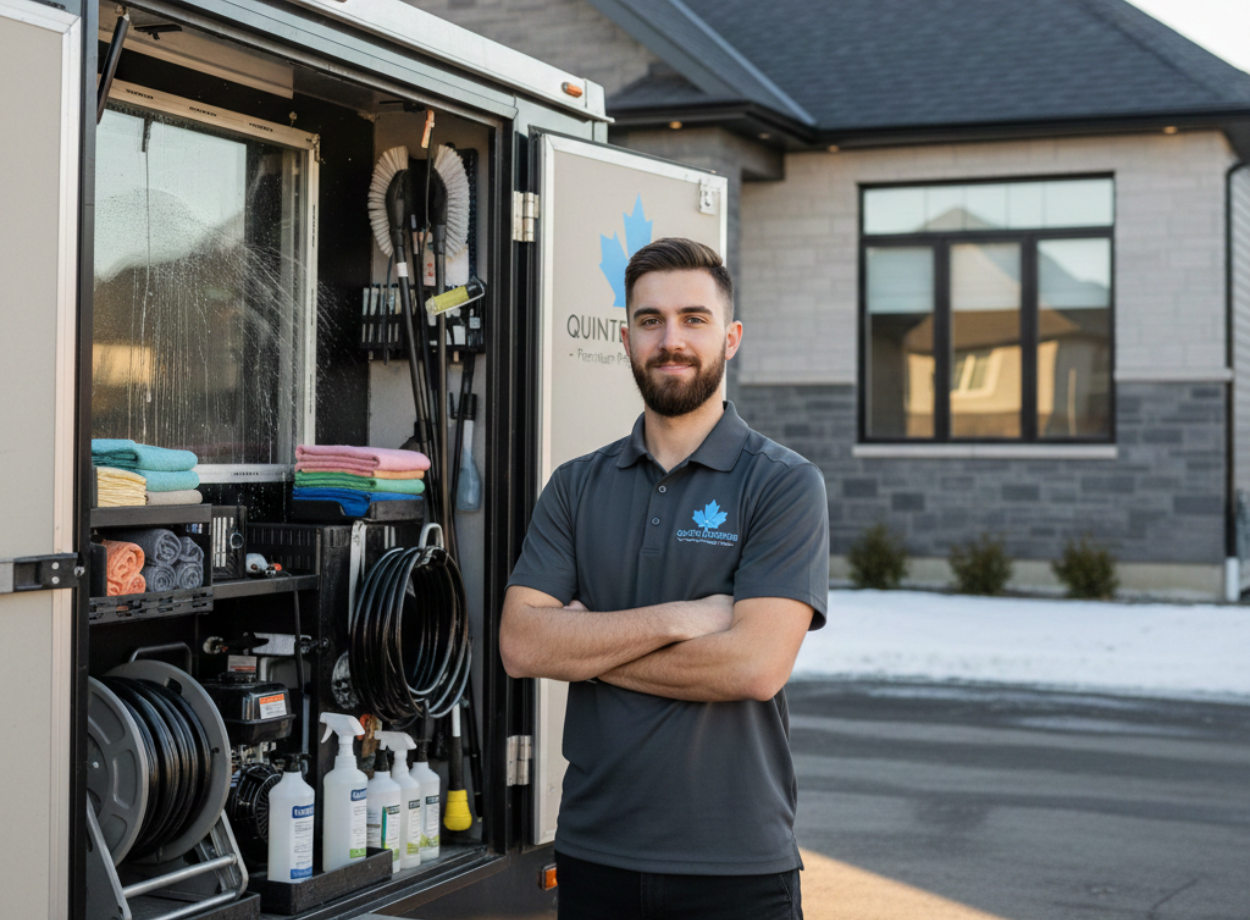
The dream of financial independence in Canada is shifting from the glass office to the residential driveway. While most people are stuck trading forty hours a week for a static paycheck, a new generation of entrepreneurs is realizing that local chores are actually untapped gold mines. This guide outlines the exact path to transition from a solo “hustler” to a systemized business executive.
Step 1: Secure Your Cash-Flow Anchor
Every empire needs a foundation of recurring revenue. You should start with Pet Waste Management. It sounds unglamorous, but weekly recurring billing is the ultimate stabilizer. This “subscription model” covers your overhead and ensures you never start a month at zero. Once you have a client on a weekly route, you have earned the trust to upsell them on your high-margin services.
Step 2: Master the High-Margin Upsell
Once your “anchor” service is running, you must introduce seasonal high-ticket tasks.
- Window Cleaning: Transition from a squeegee to a professional water-fed pole system. This allows you to clean three-story homes from the ground, increasing your speed and safety while maintaining a “listing-ready” finish for realtors.
- Gutter & Roof Care: This is a “pain-point” sale. You are selling insurance against foundation rot. Clearing debris and repairing downspouts prevents thousand-dollar headaches for homeowners.
- Pressure Washing: Use this for your marketing. Nothing generates local buzz like a “satisfying” before-and-after video of a driveway restoration. It is the fastest way to prove your value to a neighborhood.
Step 3: Map the Canadian Calendar
To avoid the “slow month” trap, you must pivot with the seasons. A successful service empire never stops moving.
- Spring: Launch with Windows and Pressure Washing to clear the winter grime.
- Summer: Maintain your Pet Waste routes and focus on exterior surface sealing.
- Fall: Shift entirely to Gutter Cleaning and leaf removal before the first freeze.
- Winter: Pivot to Snow Clearing and Ice Management. For a high-margin bonus, offer professional Holiday Lighting installations.
Step 4: Systemize and Scale
The goal is to stop “doing the work” and start “owning the system.”
- The Digital Office: Implement a CRM tool immediately. Automate your scheduling, send “I’m on my way” texts, and provide professional digital invoices.
- The Branding Leap: Invest in a logo and a clean uniform. In the service world, looking professional allows you to charge premium rates that the “kid with a lawnmower” cannot touch.
- The Three-Neighbor Challenge: Forget fancy business cards. Your mission is to sign up three neighbors on one street. This creates “cluster density,” reducing your travel time and increasing your hourly profit.
There is an undeniable “cool” factor returning to trades and services. For years, we were told that a degree was the only path to the middle class, but the modern reality is different. In places like the Bay of Quinte, a reliable window cleaner or snow removal pro is often more financially secure than a middle-manager in a cubicle. Building a business you can actually touch and see is the ultimate modern flex. It is time we stop looking down at “dirty” jobs and start looking at the balance sheets of the people running them.




Unlocking the Canadian Defence Sandbox: How Quinte Innovators Can Use Speed and Local Muscle to Scale
TL;DR: Global defense is moving faster than government bureaucracy. The new Calian 100 million shared lab network gives Canadian startups...


The Ancient Superhighway: How a Tropical Drink Reached the Bay of Quite 2,000 Years Ago
TL;DR: Discover how 2,000-year-old pottery found in the St. Lawrence River reveals a massive prehistoric trade network. Ancient residents of...


From Trenton to Torino! The Quinte Skater Ready to Shock the World
TL;DR: Trenton’s Trennt Michaud has finally hit the Olympic ice in Italy with partner Lia Pereira. After a career-defining pivot...


Stop Grinding Alone: The Secret Support Network for Quinte Business Owners
TL;DR: Starting a business in the Bay of Quinte doesn't have to be a solo grind. Our region offers a...

How to Get Free of the 9 to 5 and Get Rich From Common Chores
TL;DR: This step-by-step guide breaks down how to ditch the grind and build a high-revenue service empire in your own...


The Rail Revolution: Why Belleville Entrepreneurs Should Claim Their Ground Now
TL;DR: Alto is exploring a new southerly loop for its 300 km/h high-speed rail near Belleville. This multi-billion dollar shift...


The latest inductees into the Order of Canada has been released. We take a look at past Bay of Quinte inductees.
TL;DR: The 2026 Order of Canada inductees include pop culture icons like Nardwuar alongside Bay of Quinte legends who have...


6 Predictions for 2026: The Death of Job Hugging and the Rise of the Portfolio Professional
TL;DR: The Canadian dream is getting a massive update as we enter 2026. The traditional 9-to-5 is officially a legacy...


Is your Bay of Quinte property subject to Cowichan-style “clouded title”?
TL;DR: "Cowichan-style" property revolution could hit Ontario, specifically targeting the Bay of Quinte. For local homeowners and investors, the gold-standard...