
History
Echoes of the Bay: This week in 1793, the Mohawks receive their war prize
TL;DR: This week in 1793 a a document that shaped the future of the Bay of Quinte was signed. The Simcoe Deed is the “Paper Anchor” that secured 92,700 acres for the Mohawk people at the Bay of Quinte. Today, it remains a testament to a strategic alliance that shaped the Canadian identity.


The Price of Loyalty
The aftermath of the American Revolution was a chaotic period of shifting borders and broken promises. The Mohawk people, specifically the Kanien’kehá:ka led by the formidable Captain John Deserontyon, paid a steep price for their loyalty to the British Crown. After losing their ancestral lands in the New York Mohawk Valley, they sought a new start. They arrived at the Bay of Quinte in 1784 seeking security.
The landing at Deseronto was more than a survival story. It was the beginning of a high-stakes legal battle for recognition. While the settlement began in 1784, the real legal weight arrived nearly a decade later. The Simcoe Deed of January 14, 1793, served as the ultimate legal “thank you” from the Crown. It attempted to turn a verbal promise into a permanent legal reality for the Mohawk people in exchange for their wartime sacrifices.
Simcoe and Deserontyon
Lieutenant-Governor John Graves Simcoe had a specific vision for Upper Canada. He wanted to build a “Little England” in the wilderness. His relationship with Indigenous land rights was layered and strategic. On the other side was Captain John Deserontyon. He was a leader who understood that in the British system, a man’s word was only as good as the parchment it was written on.
Deserontyon was an entrepreneur of sovereignty. He pushed the British to codify their promises into a binding written “Patent” as white settlement began to surge. Both men realized that without clear borders, the future of the Bay of Quinte would be a mess of overlapping claims and endless disputes. This wasn’t just about land. It was about securing an asset in a volatile new world.
A Document Unlike Any Other
The “Mohawk Tract” or Treaty 3½ covered approximately 92,700 acres. This area essentially defined what we now know as Tyendinaga Township and Deseronto. The wording of the deed is what makes it a landmark in Canadian law. The “Habendum” clause granted the land to the “Chiefs, Warriors, Women, and People of the Six Nations” and their posterity forever.
This inclusion of “Women” is a massive detail. It is the only land grant in Canada that explicitly names women in the ownership. This acknowledges the matrilineal structure of Mohawk society and gives the document a modern edge that was centuries ahead of its time. However, the deed also included a restrictive clause. The land could not be sold to anyone but the Crown. This was designed to protect the territory from predatory settlers, yet it also functioned as a form of government overreach that limited full Mohawk economic sovereignty.
Winter Logistics and Cultural Divides
Imagine the logistics of January 1793. Moving official documents and high-ranking officials through the frozen Bay of Quinte was no small feat. When the deed was finally presented, it represented a clash of worldviews. The British saw it as a generous gift of land from a benevolent King. The Mohawks viewed it as a confirmation of rights they already held through their alliance and sacrifice. It was a “Paper Anchor” intended to hold the community in place as the tides of history shifted around them.
Conflict and Modern Resilience
The history of the Mohawk Tract in the 19th century is a story of whittling. Encroaching settlement and questionable surrenders reduced the original 92,700 acres significantly. This historical friction is not just a footnote. It is the foundation of the Culbertson Tract land claim in Deseronto today.
The 1793 Deed remains an active document in Canadian courts. It serves as a reminder that the borders defined in a cold January over two centuries ago still dictate the geography and politics of the region. The Simcoe Deed is a living piece of history. It is the reason the Mohawk flag continues to fly proudly over the Bay of Quinte.





History
The Ancient Superhighway: How a Tropical Drink Reached the Bay of Quite 2,000 Years Ago
TL;DR: Discover how 2,000-year-old pottery found in the St. Lawrence River reveals a massive prehistoric trade network. Ancient residents of the Bay of Quinte were sipping tropical “Black Drink” from the Gulf of Mexico long before modern supply chains existed.
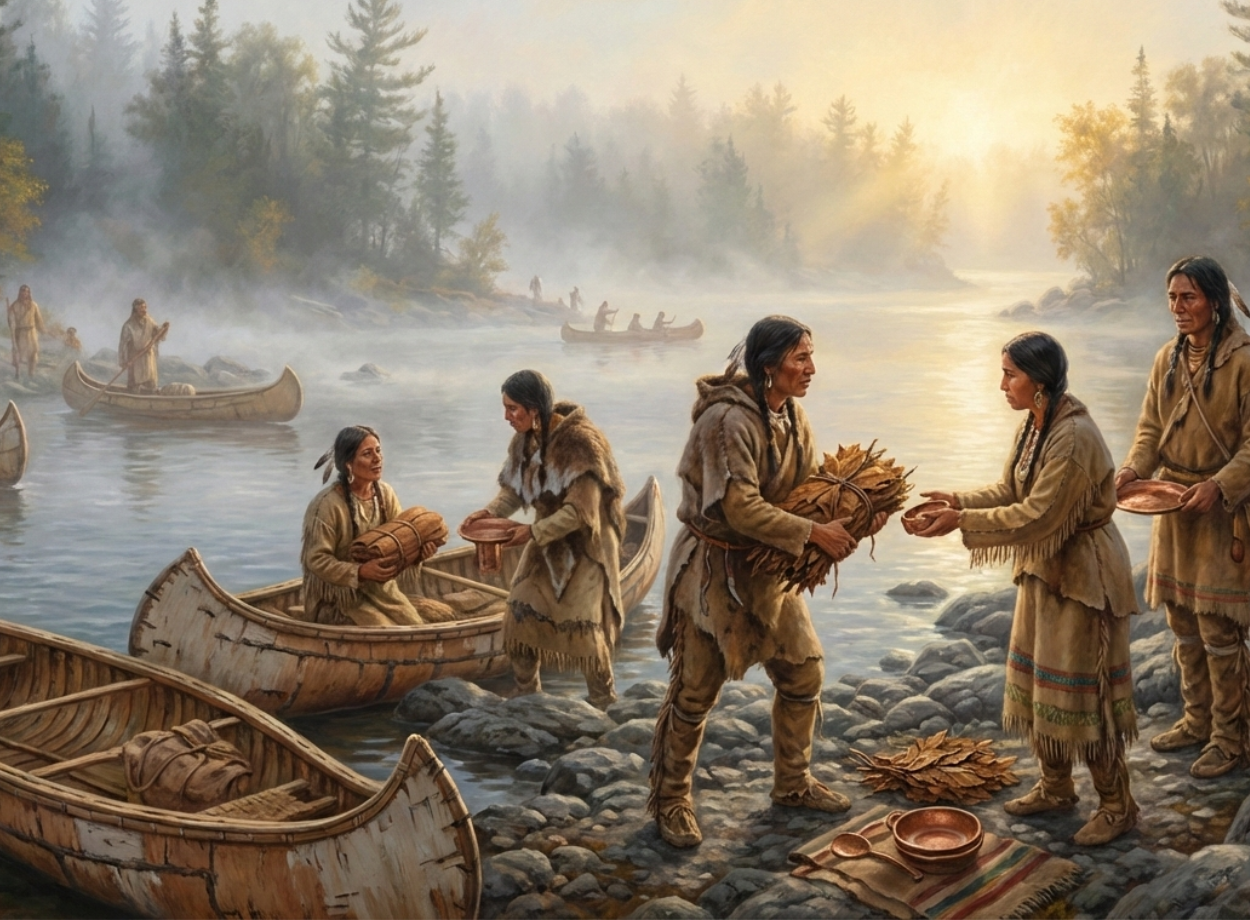
Imagine sport divers gliding through the frigid emerald waters of the St. Lawrence River near Kingston. The current is steady and the silence is absolute. Resting on the riverbed, they stumble upon a literal time capsule in the form of seven intact pottery vessels. These relics are artifacts from the Middle Woodland period, dating back roughly 2,000 years.
While the pots looked empty to the divers, modern science has a way of seeing the invisible. Researchers used residue analysis to peer into the molecular history of the clay and found a chemical ghost preserved in the ceramic. They found caffeine.
Two millennia ago, there was not a single caffeinated plant growing in the wild forests of Ontario. If you wanted a boost in the pre-industrial Great Lakes, you had to import it.
The Black Drink and the 3,000-Kilometer Caffeine Kick
The chemical signature in those Kingston pots matches Ilex vomitoria, also known as the Yaupon Holly. This plant does not handle the Canadian winter. In fact, it only grows in the humid, subtropical stretches of the Gulf Coast, specifically in places like modern-day Texas, Florida, and the Carolinas.
This tea-like beverage was known as the Black Drink. It was dark, potent, and carried a heavy hit of caffeine. For the Indigenous peoples of the South, it served as a ritual beverage used for purification, intense diplomacy, and warrior ceremonies. Finding it in a pot at the mouth of the St. Lawrence is the ancient equivalent of finding a bottle of vintage French Champagne in a remote outpost. It represents high status, sacred ceremony, and an incredible geographical reach.
The Prehistoric I-95: A North American Silk Road
We often fall into the trap of thinking ancient people lived small, isolated lives. This discovery shatters that myth. The distance from the Gulf Coast to Kingston is between 2,000 and 3,000 kilometers. This was a prehistoric relay race spanning half a continent.
The trade likely functioned as a massive bucket brigade. Goods did not move because one person walked the whole way. Instead, valuables like sea shells, copper, obsidian, and these precious tea leaves moved hand-to-hand through a sophisticated web of religious and economic connections known as the Hopewell Interaction Sphere. This was not an empire with rigid borders. It was a fluid, massive network that linked the Mississippi River to the Ohio River valley, eventually flowing into the Great Lakes and the St. Lawrence.
Cosmopolitan Tastes in the Bay of Quinte
The ancient residents of the Bay of Quinte and the surrounding Kingston area were far more cosmopolitan than we give them credit for. Picture an Elder or a Chief sitting near the shores of Lake Ontario as the autumn chill sets in. They are sipping a steaming drink made from leaves grown in a tropical paradise they would likely never see with their own eyes.
The desire for connection and stimulation is a fundamental human trait. Whether it is a modern double-espresso or a 2,000-year-old ritual tea, the drive to acquire luxury goods from far-off lands has always defined us. These pots are physical proof of a sophisticated continental economy that thrived long before European contact.
As you grab your morning brew today in downtown Kingston or Belleville, you are actually participating in a 2,000-year-old local tradition of drinking imported caffeine.
History
Echoes of the Bay: The Day the Avro Arrow Landed in Trenton
TL;DR: On February 2 1959 the Avro Arrow landed at CFB Trenton for the first and only time. It was a massive moment of national pride just 18 days before the government brutally cancelled the program and scrapped the planes. This led to a massive “brain drain” where top Canadian engineers left to build NASA’s moon rockets.
The Sound of Tomorrow
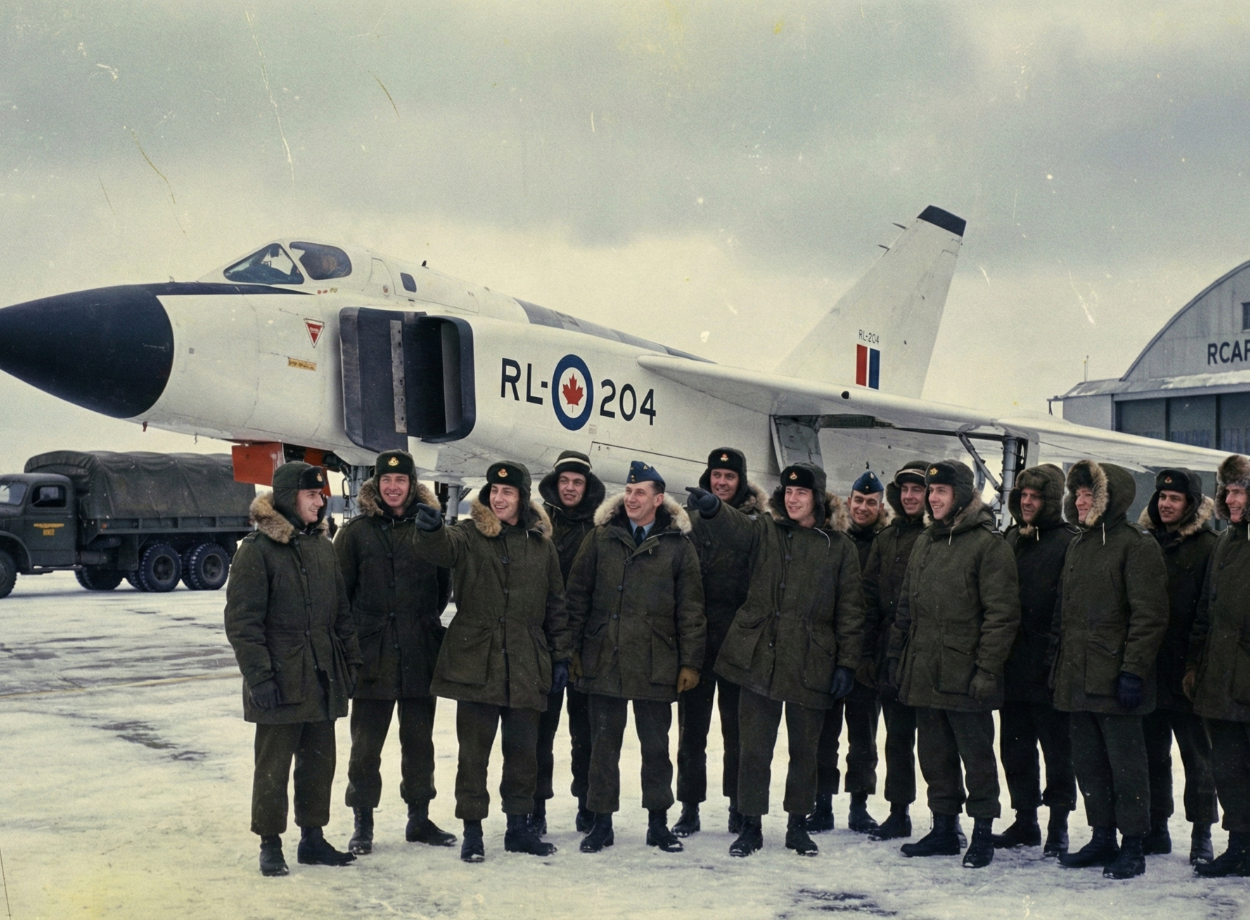
On February 2 1959 the Avro Arrow RL-204 touched down at Trenton. This was a moment of peak Canadian swagger. While the world was obsessed with the Space Race Canada was quietly building the most advanced interceptor on the planet. Seeing the Arrow in our own backyard wasn’t just a military exercise. It was a physical manifestation of a nation punching way above its weight class.
The landing was actually a bit of a happy accident. Pilot Peter Cope had to divert to Trenton because a crash at the Malton airport blocked the runway. For a brief window the Quinte region became the center of the aviation world. Locals who caught a glimpse saw a machine that looked like it had been sent back from the future. It could hit Mach 2 and climb to 50,000 feet while most of the world was still figuring out basic jet propulsion.
From Peak Pride to Black Friday
The tragedy of this story is the timing. Only eighteen days after this triumphant landing the dream was dismantled. On February 20 1959 Prime Minister John Diefenbaker axed the project in a move that still triggers heated debates in Canadian pubs today.
Critics called it a budget-saving necessity while enthusiasts saw it as a betrayal of Canadian genius. Overnight 14,000 of our brightest minds were out of work. The government didn’t just stop production. They ordered the prototypes to be chopped into scrap metal. It was a calculated erasure of excellence that forced our best engineers to head south.
The Great Canadian “What If”
If the Arrow had stayed in the air the Bay of Quinte might look very different today. We would likely be a global hub for aerospace manufacturing. Canada could have maintained its own Arctic sovereignty with a fleet that actually owned the northern skies instead of playing second fiddle in international defense deals.
The Arrow represents the “almost” in the Canadian identity. It is a ghost on the Trenton tarmac that reminds us of a time when we weren’t afraid to be the best. Today we find bits of its soul at the National Air Force Museum of Canada and in the sunken models recovered from Lake Ontario.
The NASA Legacy
The destruction of the Arrow was the beginning of the most famous “Brain Drain” in our history. Roughly thirty of the top Avro engineers were snapped up by a brand-new agency called NASA. Names like Jim Chamberlin and Owen Maynard went from designing interceptors in Ontario to becoming the architects of the Apollo moon landings. Our loss became humanity’s giant leap.
Why do we constantly settle for being “good enough” when history proves we are capable of being the absolute best?
Do you have any family stories or photos of the Arrow landing in Trenton?
History
Echoes of the Bay: Remember the Belleville Riots
TL;DR: On January 4, 1877, the Belleville Riots officially ended after the Queen’s Own Rifles were called in to stop a violent railway strike that paralyzed the region and defined Canada’s labor history.
This week we are looking back at a time when the peaceful shores of the Bay of Quinte were transformed into a scene of industrial warfare. On January 4, 1877, the tension finally broke in Belleville. This marked the official end of the infamous Grand Trunk Railway strike.
The Grand Trunk Railway strike was a a moment when our local community became the center of a national crisis. It was a week that tested the resolve of Belleville citizens. It also forced the entire country to look toward the Quinte region as we grappled with the costs of progress and the necessity of law and order.
Bedlam at the Belleville Station
The conflict ignited on New Year’s Eve. Engineers for the Grand Trunk Railway walked off the job to protest wage cuts. Within hours, the Belleville railyards were swamped by a massive, agitated crowd that local law enforcement simply could not contain.
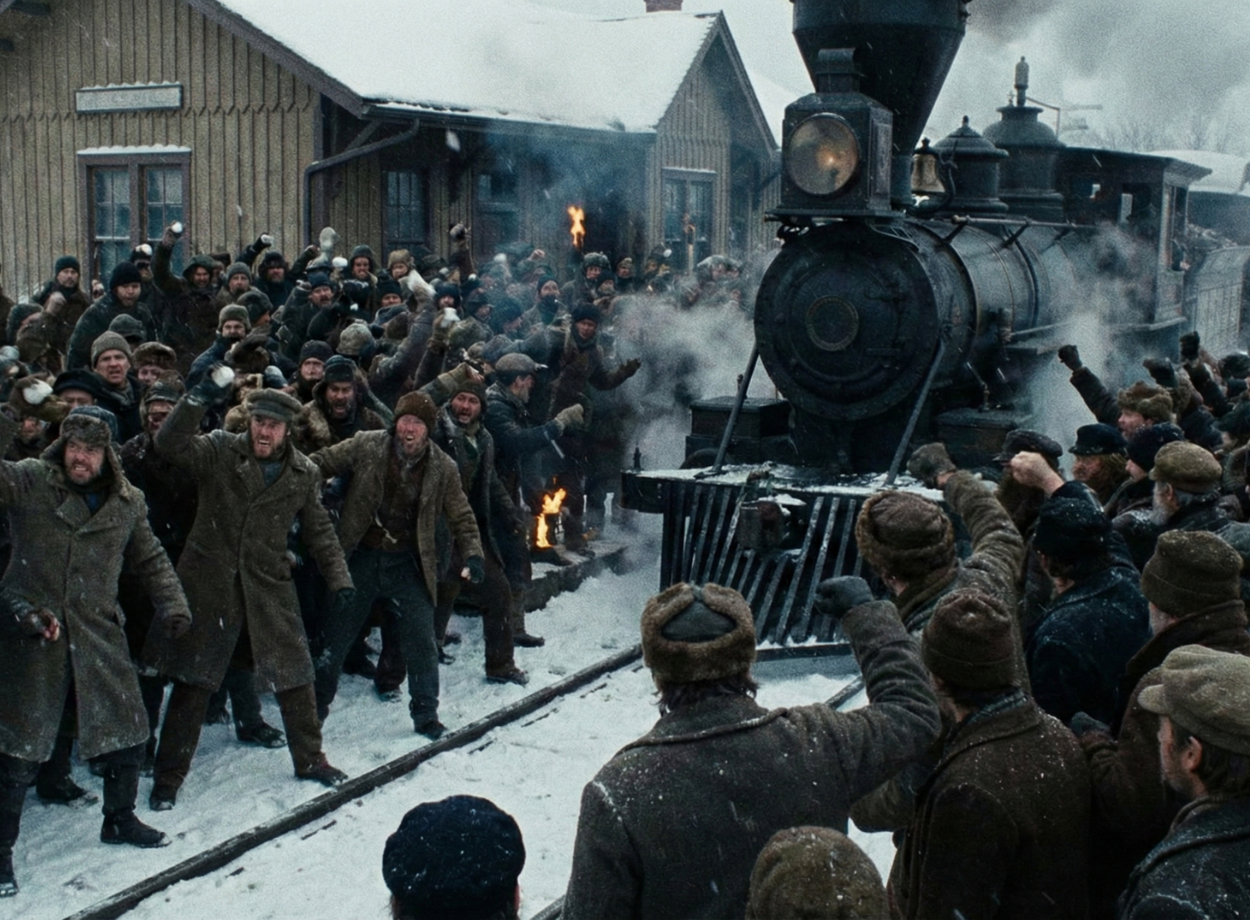
Contemporary accounts from 1877 describe a scene of total cinematic mayhem right in our own backyard. Strikers and their local sympathizers sabotaged the infrastructure. They greased the rails on the steep inclines leading out of the station. This made it impossible for the massive iron engines to gain traction. When the company tried to bring in replacement workers to move the trains, the Belleville mob turned even more aggressive.
Witnesses at the time recalled hundreds of men surrounding the locomotives. They shouted down the replacement workers and hurled stones and ice-packed snowballs through the winter air. Local police were completely overwhelmed and essentially retreated as the crowd disabled engines and took control of the yards. For a few days, the rule of law in Belleville was replaced by the rule of the mob.
The Iron Fist of Order
The situation became so dire that the government took the drastic step of calling in the Queen’s Own Rifles from Toronto. It was a heavy-handed move. It signaled that the state would not allow the Belleville hub to remain paralyzed while the national economy suffered. According to historical records of the event, the arrival of these outside soldiers was the only thing that broke the stalemate.
The soldiers successfully restored a fragile peace. This allowed the trains to move through the Bay of Quinte once more. The Queen’s Own Rifles officially departed Belleville at 7.00 p.m. on January 3 and arrived back in Toronto in the early hours of January 4. The riots were over, but the impact on our local identity was permanent.
The Quinte Perspective
From a modern entrepreneurial perspective, these riots represent the grit and fierce independence that has always defined the Bay of Quinte. We have always been a region that stands up for its own. However, it also serves as a reminder of how vital our corner of Ontario is to the national economy.
When Belleville rears up, Canada feels it. This week in 1877 proved that our local workers held the keys to the kingdom. While we respect the drive of the workers, we also recognize that national stability and protected infrastructure are the lifeblood of our prosperity. Our history is built on this kind of raw determination to protect our livelihoods and our town.
Do you think the government was right to send Toronto soldiers into Belleville to protect the railway. How does knowing our city was the site of such a massive riot change the way you look at the old railway tracks today?




Unlocking the Canadian Defence Sandbox: How Quinte Innovators Can Use Speed and Local Muscle to Scale
TL;DR: Global defense is moving faster than government bureaucracy. The new Calian 100 million shared lab network gives Canadian startups...

The Ancient Superhighway: How a Tropical Drink Reached the Bay of Quite 2,000 Years Ago
TL;DR: Discover how 2,000-year-old pottery found in the St. Lawrence River reveals a massive prehistoric trade network. Ancient residents of...


From Trenton to Torino! The Quinte Skater Ready to Shock the World
TL;DR: Trenton’s Trennt Michaud has finally hit the Olympic ice in Italy with partner Lia Pereira. After a career-defining pivot...


Stop Grinding Alone: The Secret Support Network for Quinte Business Owners
TL;DR: Starting a business in the Bay of Quinte doesn't have to be a solo grind. Our region offers a...


How to Get Free of the 9 to 5 and Get Rich From Common Chores
TL;DR: This step-by-step guide breaks down how to ditch the grind and build a high-revenue service empire in your own...


The Rail Revolution: Why Belleville Entrepreneurs Should Claim Their Ground Now
TL;DR: Alto is exploring a new southerly loop for its 300 km/h high-speed rail near Belleville. This multi-billion dollar shift...


The latest inductees into the Order of Canada has been released. We take a look at past Bay of Quinte inductees.
TL;DR: The 2026 Order of Canada inductees include pop culture icons like Nardwuar alongside Bay of Quinte legends who have...


6 Predictions for 2026: The Death of Job Hugging and the Rise of the Portfolio Professional
TL;DR: The Canadian dream is getting a massive update as we enter 2026. The traditional 9-to-5 is officially a legacy...


Is your Bay of Quinte property subject to Cowichan-style “clouded title”?
TL;DR: "Cowichan-style" property revolution could hit Ontario, specifically targeting the Bay of Quinte. For local homeowners and investors, the gold-standard...