
Local
Why Brighton’s Hallie Clarke is the Most Dangerous Woman on Ice This Valentine’s Day
TL;DR: Brighton’s own Hallie Clarke is ditching the chocolates for a high-speed date with destiny at the Milano Cortina 2026 Olympics. At just 21, this world-champion “Speed Queen” is the ultimate Gen Z icon to watch. Keep reading to find out why her Valentine’s Day medal run is about to be the biggest moment in Quinte sports history.

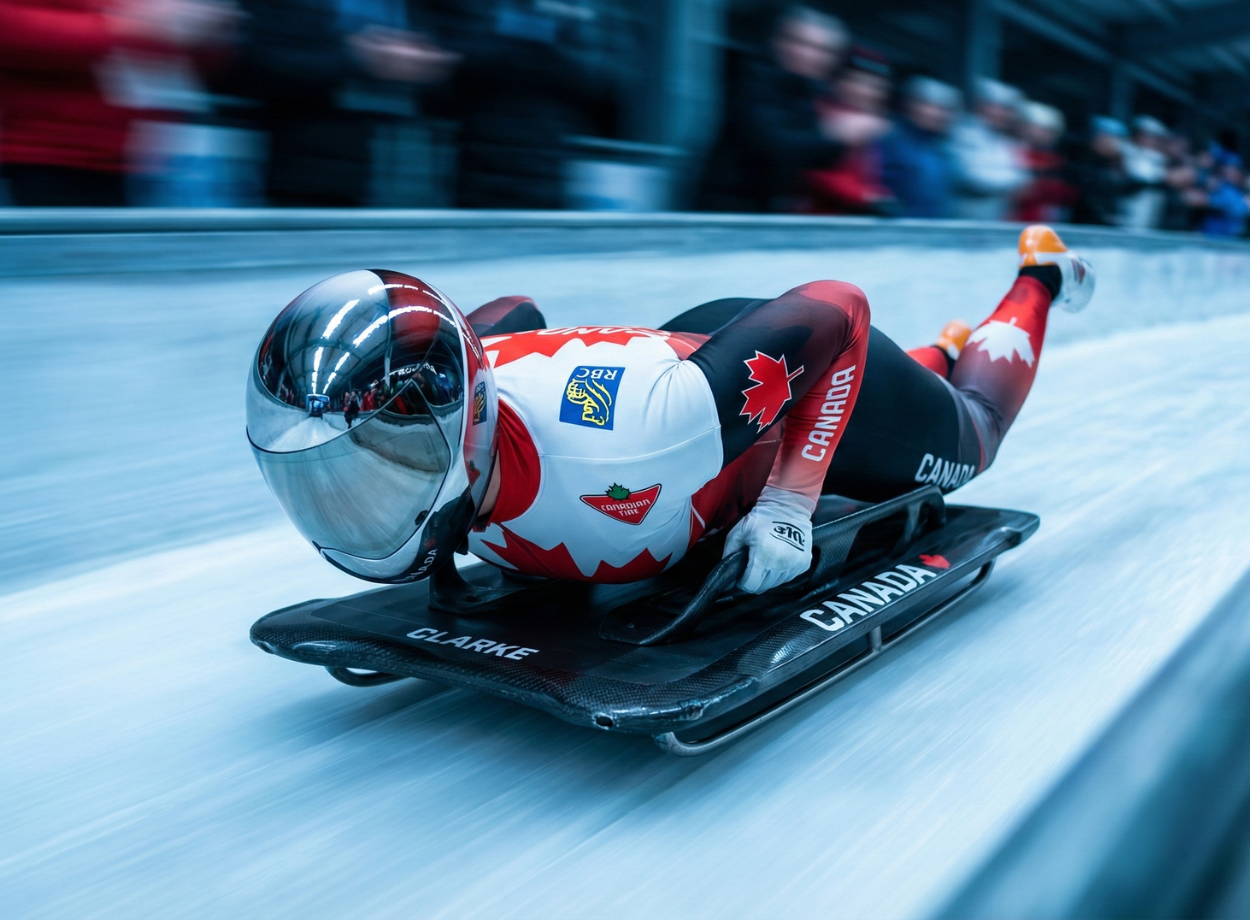
Flying down a frozen track at 130 km/h is not for the faint of heart. Doing it head-first with your chin inches from the ice is even wilder. This is the life of Hallie Clarke and the Brighton native is currently the biggest name in skeleton as we head into the Milano Cortina 2026 Olympic Winter Games.
Hallie is the definitive Gen Z sports icon. She shattered expectations at 19 when she became the youngest woman to ever win a World Championship. She did not stop there as she became the first athlete in history to hold both the Senior and Junior World Titles simultaneously. Her journey is a total vibe shift from her start as a five-year-old figure skater. She traded the sequins for a high-tech sled at 14 and she has been breaking records ever since.
The Quinte region is currently electric with pride. Being born in Belleville and raised in Brighton gave Hallie the grit that defines her career. Her family is built on athletic excellence with a national-level figure skater mom and a high-level hockey player dad. The local support from across the Bay of Quinte has been the engine behind her rise to the global stage.
A Romantic Date with Destiny
The timing for Hallie’s Olympic debut could not be more cinematic. While the rest of the world is focused on chocolates and roses on February 14, Hallie will be hunting for gold. The Women’s Skeleton Heats kick off on February 12 and 13. The Final Medal Runs land right on Valentine’s Day. This is the ultimate “love letter” to her hometown and a chance to make history once again.
Italy is 6 hours ahead of our local time so set your alarms early. You can stream the runs on CBC Gem or join the massive viewing parties popping up across Quinte West. If you want to see a hometown hero become a global legend this is the moment.
Join the Movement
We need to paint Brighton red and white. Local businesses are already putting up “Go Hallie Go” signs and the energy is unmatched. Hallie has already proven she is the fastest girl on ice and now she is ready to show the world what Quinte grit looks like.
How are you planning to celebrate Hallie’s big run on Valentine’s Day and do you think she can pull off another historic win at only 21 years old?
Would you like me to draft a series of high-energy Instagram Stories to hype up the local Brighton viewing parties?



Business
Unlocking the Canadian Defence Sandbox: How Quinte Innovators Can Use Speed and Local Muscle to Scale
TL;DR: Global defense is moving faster than government bureaucracy. The new Calian 100 million shared lab network gives Canadian startups the ultimate sandbox to build military tech without the red tape. By combining hobbyist parts with local manufacturing powerhouses like the Quinte region small teams can build the next game changing drone before the big guys even finish their paperwork. Read on to find out how.
Global conflicts are shifting fast and legacy systems are out. Agility is everything today. Canada needs better integration for crucial priorities like Arctic security. The old procurement process is painfully slow and often leaves brilliant ideas stuck in bureaucratic limbo. We need a rebellion against the old guard.
Enter the Calian Group and Calian VENTURES. They are setting up a 100 million cross-country defense lab network. This fund is a massive toolkit. It opens up the sandbox for agile Canadian entrepreneurs to build domestic tech faster than ever. That means combining speed with modified tech and local manufacturing muscle.
The 100 Million Key Access Integration and the End of Isolation
The Calian initiative is completely changing the game. They are building a physical C5ISRT ecosystem. C5ISRT stands for Command Control Communications Computers Cyber Intelligence Surveillance Reconnaissance and Targeting.
This shared lab model destroys a huge barrier to entry. Small teams no longer need to build multimillion-dollar testing ranges. They can plug prototypes straight into a NATO-ready environment. The real magic here is integration over pure innovation. We do not always need a brand new invention. We just need existing tools to talk to each other across land air sea and cyber domains. Canadian tech often focuses too much on software apps. Real hardware integration is the untapped goldmine and these shared labs are the picks and shovels.
The Blueprint ALM Meca and the Art of the Out of Nowhere Success
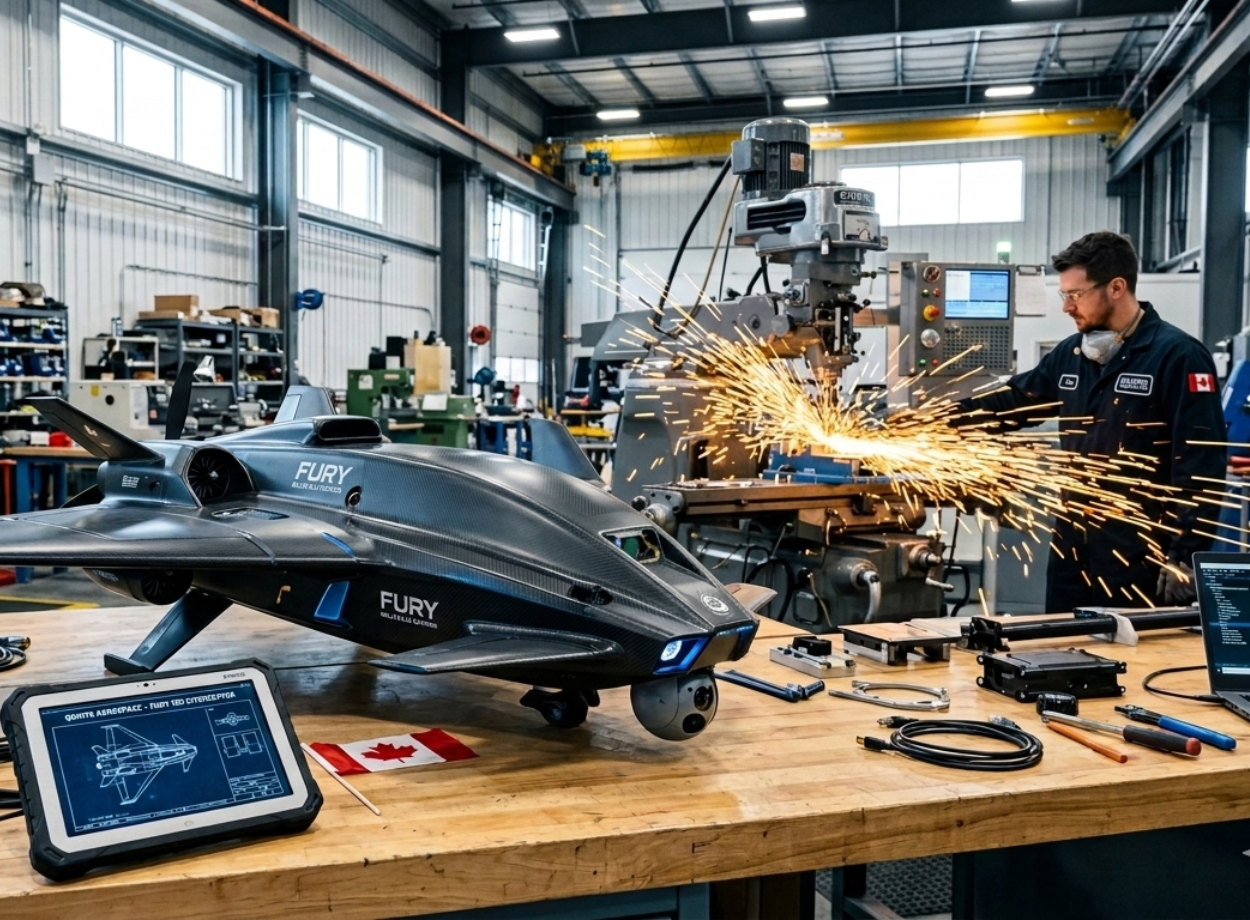
Look at ALM Meca as the perfect case study. They are a small 17 person precision machining company in France. They built the Fury 120 interceptor drone completely under the radar.
They bootstrapped the whole thing with zero initial government funding or venture capital. They kept their intellectual property and moved at their own pace. Their genius move was using custom precision machined micro turbojets. These are engines popularized by remote control jet hobbyists rather than expensive military hardware. They focused on pure speed to defeat cheap loitering munitions. The drone hits 700 kilometers per hour and they built it in under a year.
Garage tinkerers and local machine shops are the new defense contractors. Being outside the prime contractor system gives small companies a massive advantage. They can embrace radical low cost thinking that huge defense giants simply cannot execute quickly.
Translating the Model The Quinte Region and the Local Loop Advantage
We can do this right here in Ontario. The Quinte region and Belleville are manufacturing powerhouses. We have serious advanced manufacturing sectors with strong machining electronics and materials supply chains. We also have great innovation resources at places like Loyalist College.
Belleville is a sleeping giant of advanced manufacturing just waiting for tech startups to knock on the door. We need to create a local loop. Imagine an agile aerospace startup teaming up with a Belleville manufacturing shop. Instead of waiting years for a massive prime contract they build a high performance prototype fast and locally. They use modified high tech or hobby tech components just like ALM Meca.
Actionable Steps for Quinte Entrepreneurs
Here is the playbook for Quinte entrepreneurs.
First, identify the niche. Focus on specific sub problems. Build secure data links for existing drones or ruggedized edge sensors.
Second, build the agile consortium. Match local tech talent with local manufacturing capacity.
Third, minimize dependence and maximize speed. Bootstrap a minimum viable product to prove your capability before chasing massive funding.
Fourth, target the shared labs. Use your local prototype to prove you have what it takes and then plug into the Calian shared lab network for final validation instead of waiting for a general contract.
Seizing the Sovereign Opportunity
The Calian funding provides the access. ALM Meca proves outsiders can win. Quinte manufacturing is ready to deploy. Defense innovation is a sprint right now and the biggest barrier is a slow mindset rather than a lack of capital. Quinte operators have the tools to build sovereign Canadian defense tech and completely change the game.
What do you think? Are local innovators ready to bypass the red tape and start building? Can Belleville become the next hub for agile defense tech?
History
The Ancient Superhighway: How a Tropical Drink Reached the Bay of Quite 2,000 Years Ago
TL;DR: Discover how 2,000-year-old pottery found in the St. Lawrence River reveals a massive prehistoric trade network. Ancient residents of the Bay of Quinte were sipping tropical “Black Drink” from the Gulf of Mexico long before modern supply chains existed.
Imagine sport divers gliding through the frigid emerald waters of the St. Lawrence River near Kingston. The current is steady and the silence is absolute. Resting on the riverbed, they stumble upon a literal time capsule in the form of seven intact pottery vessels. These relics are artifacts from the Middle Woodland period, dating back roughly 2,000 years.
While the pots looked empty to the divers, modern science has a way of seeing the invisible. Researchers used residue analysis to peer into the molecular history of the clay and found a chemical ghost preserved in the ceramic. They found caffeine.
Two millennia ago, there was not a single caffeinated plant growing in the wild forests of Ontario. If you wanted a boost in the pre-industrial Great Lakes, you had to import it.
The Black Drink and the 3,000-Kilometer Caffeine Kick
The chemical signature in those Kingston pots matches Ilex vomitoria, also known as the Yaupon Holly. This plant does not handle the Canadian winter. In fact, it only grows in the humid, subtropical stretches of the Gulf Coast, specifically in places like modern-day Texas, Florida, and the Carolinas.
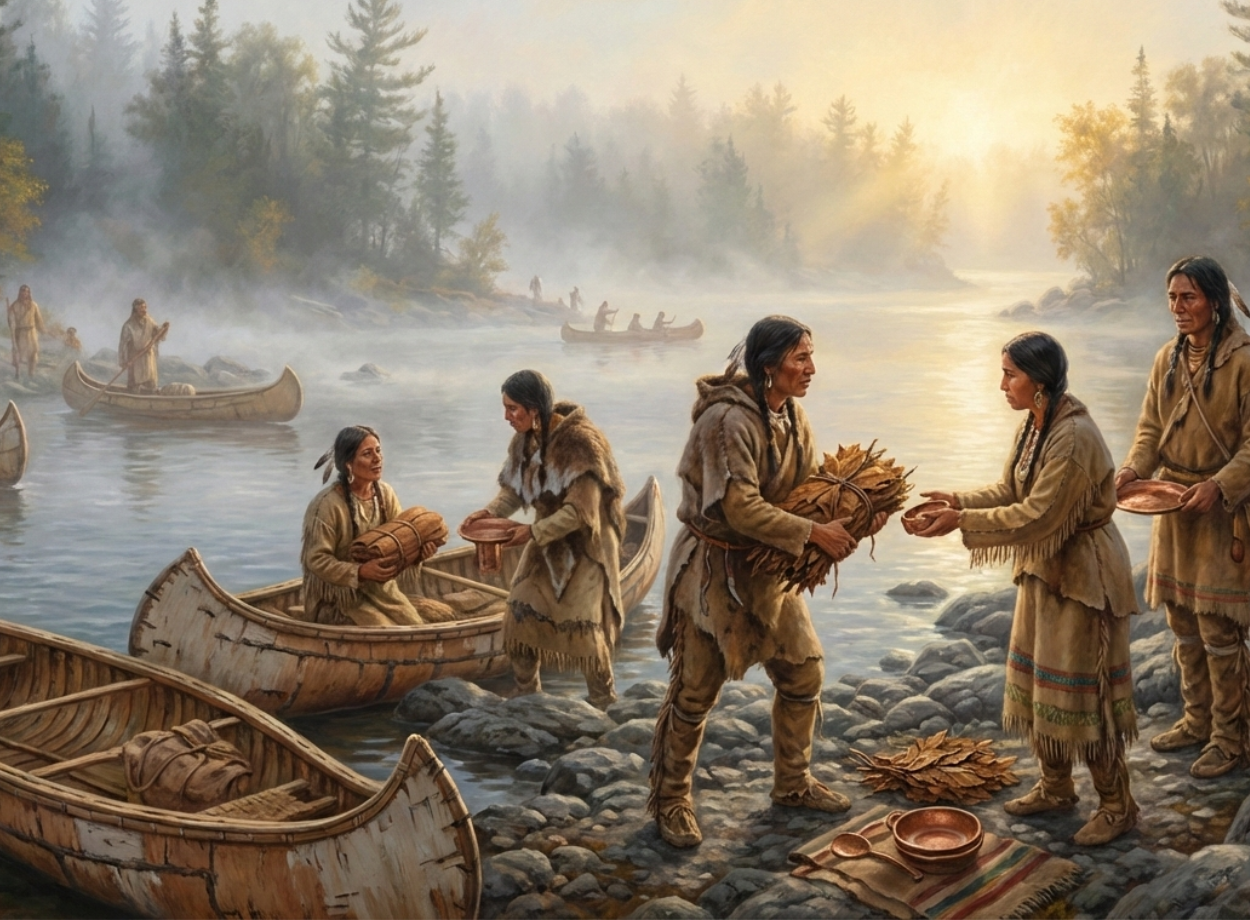
This tea-like beverage was known as the Black Drink. It was dark, potent, and carried a heavy hit of caffeine. For the Indigenous peoples of the South, it served as a ritual beverage used for purification, intense diplomacy, and warrior ceremonies. Finding it in a pot at the mouth of the St. Lawrence is the ancient equivalent of finding a bottle of vintage French Champagne in a remote outpost. It represents high status, sacred ceremony, and an incredible geographical reach.
The Prehistoric I-95: A North American Silk Road
We often fall into the trap of thinking ancient people lived small, isolated lives. This discovery shatters that myth. The distance from the Gulf Coast to Kingston is between 2,000 and 3,000 kilometers. This was a prehistoric relay race spanning half a continent.
The trade likely functioned as a massive bucket brigade. Goods did not move because one person walked the whole way. Instead, valuables like sea shells, copper, obsidian, and these precious tea leaves moved hand-to-hand through a sophisticated web of religious and economic connections known as the Hopewell Interaction Sphere. This was not an empire with rigid borders. It was a fluid, massive network that linked the Mississippi River to the Ohio River valley, eventually flowing into the Great Lakes and the St. Lawrence.
Cosmopolitan Tastes in the Bay of Quinte
The ancient residents of the Bay of Quinte and the surrounding Kingston area were far more cosmopolitan than we give them credit for. Picture an Elder or a Chief sitting near the shores of Lake Ontario as the autumn chill sets in. They are sipping a steaming drink made from leaves grown in a tropical paradise they would likely never see with their own eyes.
The desire for connection and stimulation is a fundamental human trait. Whether it is a modern double-espresso or a 2,000-year-old ritual tea, the drive to acquire luxury goods from far-off lands has always defined us. These pots are physical proof of a sophisticated continental economy that thrived long before European contact.
As you grab your morning brew today in downtown Kingston or Belleville, you are actually participating in a 2,000-year-old local tradition of drinking imported caffeine.
Local
From Trenton to Torino! The Quinte Skater Ready to Shock the World
TL;DR: Trenton’s Trennt Michaud has finally hit the Olympic ice in Italy with partner Lia Pereira. After a career-defining pivot in 2022, the pride of Quinte West is hunting for hardware at the 2026 Winter Games.

Quinte’s Prince of the Ice: Trennt Michaud Goes for Gold
The atmosphere inside the Milano Cortina 2026 venue is electric. Fans from across the globe have gathered in Italy to witness the pinnacle of figure skating. Among the elite athletes taking the ice is a face very familiar to the Bay of Quinte. Trennt Michaud is finally realizing his Olympic dream. Born in Belleville and raised in Trenton, Trennt has spent years as a staple of the Canadian skating scene. Now he is representing the Maple Leaf on the world’s biggest stage. It is a moment of massive pride for Quinte West.
Meet the Partner: Lia Pereira
Trennt isn’t flying solo. He is joined by the incredibly talented Lia Pereira. Hailing from Milton, Ontario, Lia was already a high-level singles skater before she ever considered pairs. Her transition to this discipline only started in 2022. The fact that she is already at the Olympics is nothing short of incredible. This duo is known for powerful lifts and Lia’s explosive jumping ability. They bring a gritty competitive spirit to the ice that feels very much in line with their hardworking Ontario roots.
From Tryout to Champions
The road to Italy was not a straight line. After a long and successful partnership with Evelyn Walsh ended, Trennt faced a difficult crossroads. He needed a new partner to keep his Olympic ambitions alive. When he linked up with Lia for a tryout in 2022, the chemistry was instant. They shocked the skating world by winning a medal at their very first Grand Prix event just months after teaming up. They arrived in Italy as the reigning 2026 Canadian National Champions.
When to Watch
Italy is six hours ahead of us here in Quinte. We’ve done the math so you don’t have to. Note that the dates are slightly different than early projections, so update your calendars!Pairs Short ProgramSunday, February 15, 20261:45 PM EST (Live)Pairs Free Skate (Medal Event)Monday, February 16, 20262:00 PM EST (Live)
Show Your Quinte Pride
Whether you are watching from a sports bar in Trenton or your living room in Belleville, make sure to send some digital love. Use the hashtag #QuinteOnIce to support the local boy who never gave up. Trennt is one of the most respected veterans on the Canadian team. He often spends time mentoring the next generation of skaters back home. The whole region is behind him.



Unlocking the Canadian Defence Sandbox: How Quinte Innovators Can Use Speed and Local Muscle to Scale
TL;DR: Global defense is moving faster than government bureaucracy. The new Calian 100 million shared lab network gives Canadian startups...


The Ancient Superhighway: How a Tropical Drink Reached the Bay of Quite 2,000 Years Ago
TL;DR: Discover how 2,000-year-old pottery found in the St. Lawrence River reveals a massive prehistoric trade network. Ancient residents of...


From Trenton to Torino! The Quinte Skater Ready to Shock the World
TL;DR: Trenton’s Trennt Michaud has finally hit the Olympic ice in Italy with partner Lia Pereira. After a career-defining pivot...


Stop Grinding Alone: The Secret Support Network for Quinte Business Owners
TL;DR: Starting a business in the Bay of Quinte doesn't have to be a solo grind. Our region offers a...
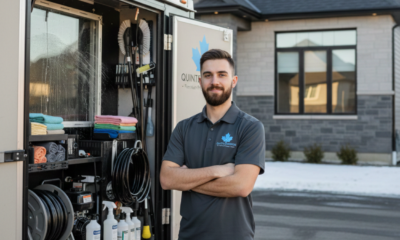

How to Get Free of the 9 to 5 and Get Rich From Common Chores
TL;DR: This step-by-step guide breaks down how to ditch the grind and build a high-revenue service empire in your own...


The Rail Revolution: Why Belleville Entrepreneurs Should Claim Their Ground Now
TL;DR: Alto is exploring a new southerly loop for its 300 km/h high-speed rail near Belleville. This multi-billion dollar shift...


The latest inductees into the Order of Canada has been released. We take a look at past Bay of Quinte inductees.
TL;DR: The 2026 Order of Canada inductees include pop culture icons like Nardwuar alongside Bay of Quinte legends who have...


6 Predictions for 2026: The Death of Job Hugging and the Rise of the Portfolio Professional
TL;DR: The Canadian dream is getting a massive update as we enter 2026. The traditional 9-to-5 is officially a legacy...


Is your Bay of Quinte property subject to Cowichan-style “clouded title”?
TL;DR: "Cowichan-style" property revolution could hit Ontario, specifically targeting the Bay of Quinte. For local homeowners and investors, the gold-standard...