
Health
Scientists Issue Warn Peers About ‘Mirror Life’ Research

A group of world-class scientists, including Nobel Prize winners, has published a report asking their peers to, quite literally, stop what they’re doing. In a world obsessed with ‘disruption’ and ‘progress at all costs,’ this is a rare moment of collective caution. But that’s exactly what’s happening in the quiet, and increasingly spooky, world of synthetic biology.
The subject is “mirror life,” a hypothetical synthetic organism built from the mirror-image versions of the molecules that make up all life on Earth. For billions of years, life on our planet has been built from molecules with a specific chirality. These mirror organisms would be the exact opposite.
A Pandemic That Our Bodies Can’t See
So, what’s the big deal? A landmark December 2024 report in the journal Science outlined the risks. The core problem is that because mirror bacteria are, well, backwards, our immune systems wouldn’t recognize them. Our bodies’ defences are built like a lock-and-key system, with specific receptors designed to detect the molecules of invading pathogens. A mirror microbe would be like a key that fits no lock. It could replicate unchecked, causing lethal infections in humans, animals, and plants.
Even worse, these organisms would have no natural predators or competitors. They could become the ultimate invasive species, spreading through our ecosystems with no natural checks or balances. And no, a simple dose of antibiotics won’t work either. It’s a potential ecological and public health catastrophe on a scale that makes a regular pandemic look like a bad head cold.
The World Responds
Thankfully, this isn’t a problem we need to solve tomorrow. The technology to create a complete mirror organism is still at least a decade away. The good news is that the scientific community is already responding. Since the December report, meetings have been held and planned throughout 2025 at prestigious institutions worldwide, including the Institut Pasteur in Paris. The conversation is less about stopping science altogether and more about drawing a clear line in the sand.
Researchers are making the crucial distinction that they’re not against the use of mirror molecules for things like new pharmaceuticals, which could be more resistant to degradation in the body and offer new therapies for chronic diseases. They just believe that the creation of a self-replicating, autonomous mirror organism is a red line that should not be crossed. For them, the risk-reward ratio just doesn’t add up.
This dialogue is exactly what we need, and it’s a refreshing change from the usual “ask for forgiveness, not permission” mentality that defines so much of modern tech. It’s a prime example of global cooperation to address a potential threat before it even exists. Which is what this extremely significant discovery requires.









Business
This Canadian Startup Could Change Cancer Treatment Forever
Tatum Bioscience has created a scalable cancer vaccine using bioengineered nanofilaments that turn a patient’s tumor into an immune-stimulating agent. This “off-the-shelf” method is more efficient and affordable than personalized therapies, and the company is now fundraising for human clinical trials.


In a world where medical breakthroughs often come with astronomical price tags and logistical nightmares, a new approach is emerging from the heart of Canada. Tatum Bioscience, a Sherbrooke-based medtech startup, has unveiled a new kind of cancer vaccine that is not only showing incredible promise but is designed from the ground up to be flexible, efficient, and, most importantly, scalable.
The problem with many cutting-edge cancer vaccines is their reliance on a complex, personalized approach. These treatments, which are tailored to an individual patient’s unique tumor, are time-consuming and expensive to produce. The result is a therapy that, while effective, can be out of reach for many. Tatum Bioscience offers a nationalistic alternative, a made-in-Canada solution to a global problem.
Their technology, which uses bioengineered nanofilaments, represents a paradigm shift. Rather than creating a custom vaccine for each patient, Tatum’s approach turns the tumor itself into the source of the immune response. By physically attaching immunostimulatory molecules to cancer cells, the therapy transforms these rogue cells into targets, a process that can be applied across different types of cancer. This streamlined manufacturing process, which ingeniously uses bacteria as “miniature drug factories,” holds the key to widespread availability and could dramatically cut the time from diagnosis to treatment. This is the kind of modern, entrepreneurial spirit Canadians are known for.
The company, founded in 2019 by researchers from Université de Sherbrooke, has already raised $5.8 million from Quebec investors and is now looking for more funding to move to clinical trials with human patients. This is a critical next step, and the success of this project could put Canada on the map as a leader in next-generation cancer therapies. It is an exciting time for Canadian innovation, and companies like Tatum Bioscience are proving that when it comes to solving the world’s biggest problems, we are at the forefront.
Join us on X, Facebook, or Instagram and share your thoughts.
Sources
- Tatum Bioscience Makes Case for Scalable Cancer Vaccine – BetaKit, Madison McLauchlan, September 18, 2025. https://betakit.com/tatum-bioscience-makes-case-for-scalable-cancer-vaccine/
- Nanofilament immunotherapy induces potent antitumor vaccine responses – PubMed, Kevin Neil et al. https://pubmed.ncbi.nlm.nih.gov/40889802/

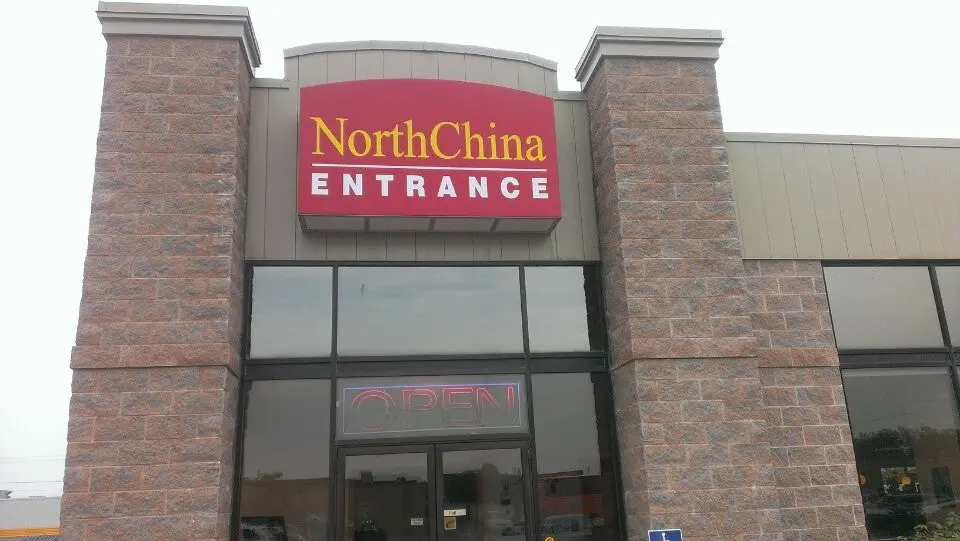
Two separate narratives are currently unfolding for the North China Buffet at 300 Bell Boulevard. The restaurant is for sale while also being at the center of a public health issue.
The 7,500 square foot eatery is listed for $199,000 as a “turnkey operation,” with the current owners offering to train a new proprietor.
However, the business was temporarily closed by the South East Health Unit (SEHU) on July 28, 2025. This was in response to a video showing staff retrieving food from a dumpster that the health unit had previously ordered to be discarded as unsafe. The SEHU called this a “serious breach” of Ontario’s Food Premises Regulation. The restaurant remains closed pending a full re-inspection.
The public health scandal casts a shadow over the business listing. Any new owner would be tasked with not only running the business, but also with rebuilding public trust.
Join us here on X or here on Facebook to comment on this article.




Unlocking the Canadian Defence Sandbox: How Quinte Innovators Can Use Speed and Local Muscle to Scale
TL;DR: Global defense is moving faster than government bureaucracy. The new Calian 100 million shared lab network gives Canadian startups...


The Ancient Superhighway: How a Tropical Drink Reached the Bay of Quite 2,000 Years Ago
TL;DR: Discover how 2,000-year-old pottery found in the St. Lawrence River reveals a massive prehistoric trade network. Ancient residents of...


From Trenton to Torino! The Quinte Skater Ready to Shock the World
TL;DR: Trenton’s Trennt Michaud has finally hit the Olympic ice in Italy with partner Lia Pereira. After a career-defining pivot...
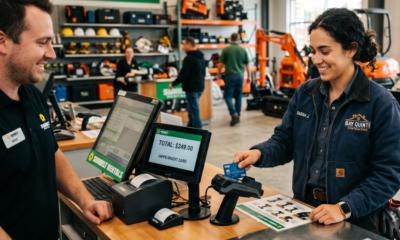

How Rented Equipment Can Bankroll Your Belleville Summer
TL;DR: Spring has sprung in the Quinte region and homeowners are desperate to fix their messy yards. We break down...


Stop Grinding Alone: The Secret Support Network for Quinte Business Owners
TL;DR: Starting a business in the Bay of Quinte doesn't have to be a solo grind. Our region offers a...
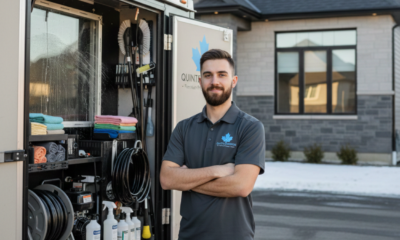

How to Get Free of the 9 to 5 and Get Rich From Common Chores
TL;DR: This step-by-step guide breaks down how to ditch the grind and build a high-revenue service empire in your own...


The latest inductees into the Order of Canada has been released. We take a look at past Bay of Quinte inductees.
TL;DR: The 2026 Order of Canada inductees include pop culture icons like Nardwuar alongside Bay of Quinte legends who have...


6 Predictions for 2026: The Death of Job Hugging and the Rise of the Portfolio Professional
TL;DR: The Canadian dream is getting a massive update as we enter 2026. The traditional 9-to-5 is officially a legacy...


Is your Bay of Quinte property subject to Cowichan-style “clouded title”?
TL;DR: "Cowichan-style" property revolution could hit Ontario, specifically targeting the Bay of Quinte. For local homeowners and investors, the gold-standard...