
Business
North China Buffet For Sale Amidst Health Scandal

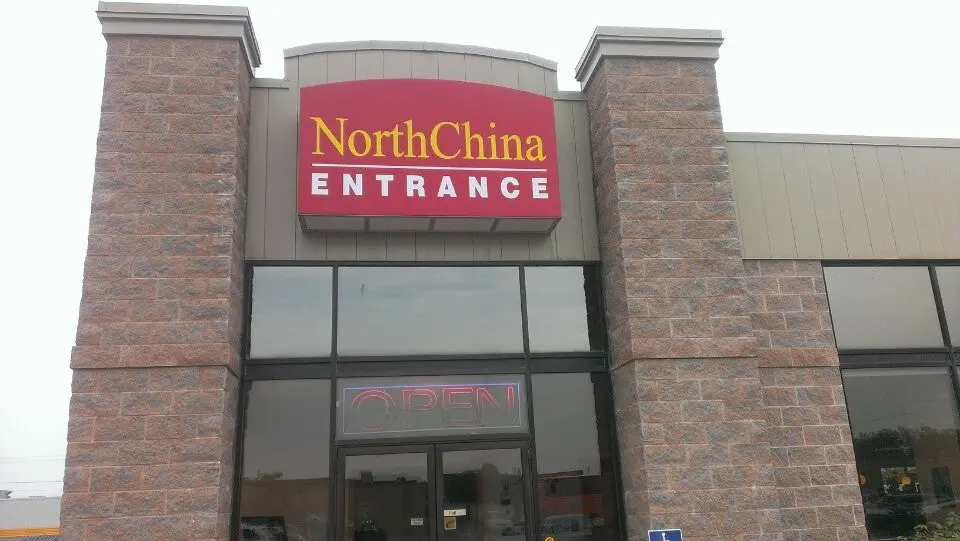
Two separate narratives are currently unfolding for the North China Buffet at 300 Bell Boulevard. The restaurant is for sale while also being at the center of a public health issue.
The 7,500 square foot eatery is listed for $199,000 as a “turnkey operation,” with the current owners offering to train a new proprietor.
However, the business was temporarily closed by the South East Health Unit (SEHU) on July 28, 2025. This was in response to a video showing staff retrieving food from a dumpster that the health unit had previously ordered to be discarded as unsafe. The SEHU called this a “serious breach” of Ontario’s Food Premises Regulation. The restaurant remains closed pending a full re-inspection.
The public health scandal casts a shadow over the business listing. Any new owner would be tasked with not only running the business, but also with rebuilding public trust.
Join us here on X or here on Facebook to comment on this article.





Business
How Rented Equipment Can Bankroll Your Belleville Summer
TL;DR: Spring has sprung in the Quinte region and homeowners are desperate to fix their messy yards. We break down how to launch three income streams in Belleville using rented gear and smart capitalism. A single swipe of your credit card at the local rental counter is all it takes to unlock a high-profit summer business.

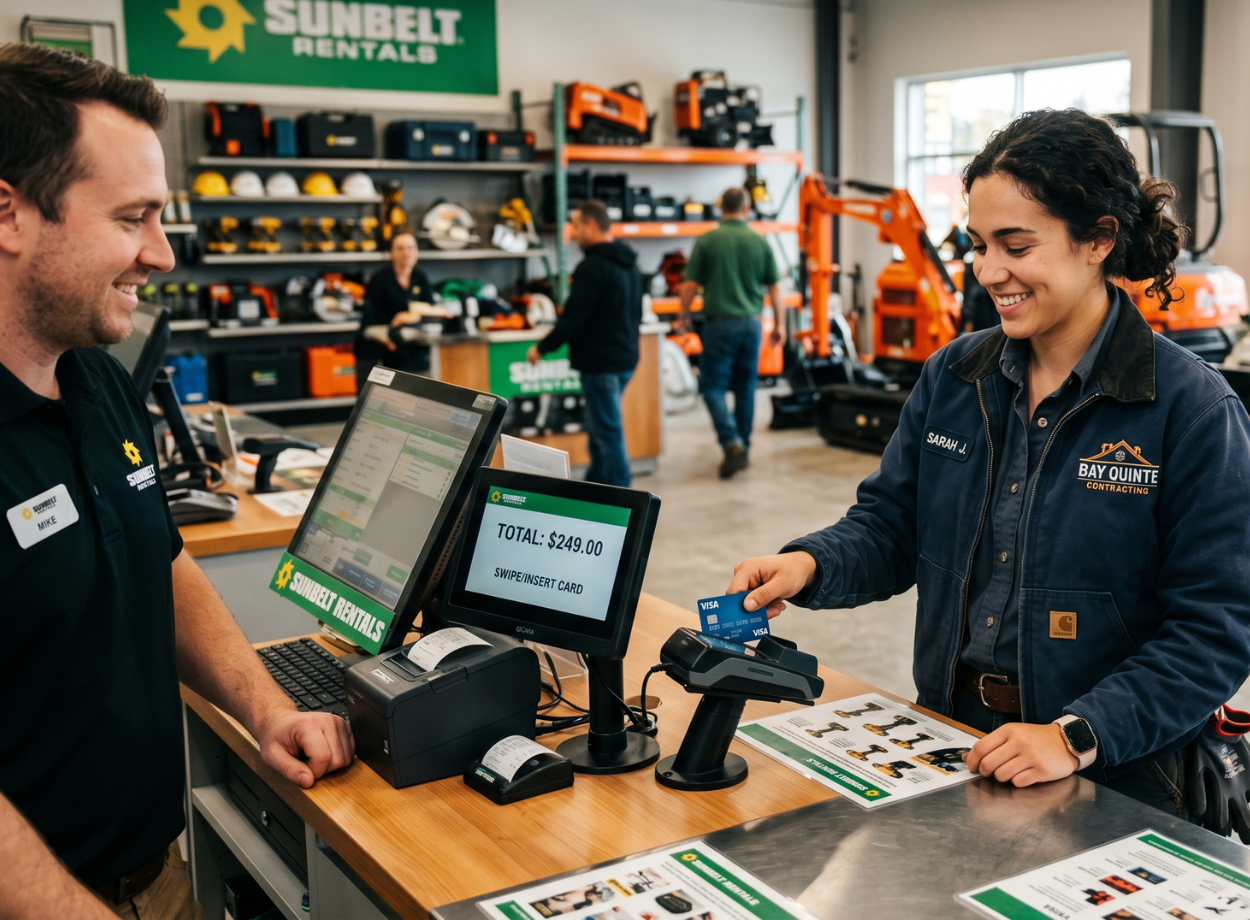
The Quinte region is finally thawing out and property owners are panicking about their messy yards. Belleville homeowners are desperate for reliable people to clean up the winter wreckage and prep their spaces for summer. You do not need a massive business loan to start cashing in on this demand. You just need a driver’s license, a solid work ethic, and a quick trip to Sunbelt Rentals on Enterprise Drive or the Home Depot tool desk on Bell Blvd. By renting equipment you can launch revenue streams with zero long-term commitment. Renting is the ultimate hack for testing a business idea and allows you to close deals before ever investing a dime.
1. Sustainable Scrap Hauling and Yard Clean Up
How to start Rent a pickup truck or an enclosed utility trailer for the weekend. Local spots like Battlefield Equipment Rentals often have daily or weekend rates that let you maximize a short window of work. Grab some heavy-duty garbage bags, gloves, and a reliable rake to compliment your rental.
The Modern Edge Give your business a modern edge by being an eco-warrior. Properly sorting scrap metal and green waste for local recycling centers instead of hitting the landfill makes you stand out. People love paying a premium when they feel good about where their junk is going.
Scaling up Join local Quinte and Belleville community groups on Facebook and post photos of the exact trailer you rented. Offer a flat rate for removal. You will know it is time to pivot when you are turning down jobs because you cannot make it to the dump fast enough. At that point hire a helper from to handle the heavy lifting while you focus on quoting and closing.
2. Viral-Ready Stump Grinding
How to start Rent a walk-behind stump grinder. These machines are absolute beasts and very intimidating to the average homeowner. Pick one up from a local rental yard and spend an hour practicing on a soft stump on your own property or offer the service for free to get the mechanics down safely.
The Marketing Hack Stump grinding is the king of oddly satisfying content. Film the process for TikTok or Instagram Reels. These videos go viral constantly and serve as free local marketing. Drive through older Belleville neighborhoods like the East Hill and look for freshly cut trees. A simple flyer or a viral video link can secure a lucrative contract.
Scaling up The moment the rental fees start eating into more than thirty percent of your monthly profits you need to finance your own commercial grinder. Once you own the equipment reach out to local tree-cutting services in Hastings County that do not offer grinding. You can easily become their dedicated subcontractor.
3. Premium Pressure Washing and Restoration
How to start Head to the local tool rental desk and grab a commercial-grade pressure washer with a surface cleaner attachment. The surface cleaner is the secret weapon because it blasts driveways evenly and in half the time of a standard wand.
The Profit Secret Pressure washing is basically printing money if you understand chemical treatments. Moving beyond just water into soft-washing with eco-friendly soaps allows you to charge double what an amateur charges. It elevates the service from a chore to a premium property restoration. Use a QR code on a lawn sign while you work to capture leads from curious neighbors.
Scaling up Level up when you are booking back-to-back jobs and the physical fatigue of dragging rented hoses limits your output. Build a custom rig by mounting your own high-gallon washer in a truck or van with a dedicated water tank. This cuts setup time to minutes and lets you take on bidder commercial jobs.
Renting equipment is the ultimate cheat code to start a lucrative business in Belleville this season. You get immediate access to professional tools without the terrifying overhead and stress of ownership. Stop scrolling and start scaling.
Which of these three side hustles fits your vibe the best? Are you ready to grab your wallet and start scaling this summer?
Business
Unlocking the Canadian Defence Sandbox: How Quinte Innovators Can Use Speed and Local Muscle to Scale
TL;DR: Global defense is moving faster than government bureaucracy. The new Calian 100 million shared lab network gives Canadian startups the ultimate sandbox to build military tech without the red tape. By combining hobbyist parts with local manufacturing powerhouses like the Quinte region small teams can build the next game changing drone before the big guys even finish their paperwork. Read on to find out how.
Global conflicts are shifting fast and legacy systems are out. Agility is everything today. Canada needs better integration for crucial priorities like Arctic security. The old procurement process is painfully slow and often leaves brilliant ideas stuck in bureaucratic limbo. We need a rebellion against the old guard.
Enter the Calian Group and Calian VENTURES. They are setting up a 100 million cross-country defense lab network. This fund is a massive toolkit. It opens up the sandbox for agile Canadian entrepreneurs to build domestic tech faster than ever. That means combining speed with modified tech and local manufacturing muscle.
The 100 Million Key Access Integration and the End of Isolation
The Calian initiative is completely changing the game. They are building a physical C5ISRT ecosystem. C5ISRT stands for Command Control Communications Computers Cyber Intelligence Surveillance Reconnaissance and Targeting.
This shared lab model destroys a huge barrier to entry. Small teams no longer need to build multimillion-dollar testing ranges. They can plug prototypes straight into a NATO-ready environment. The real magic here is integration over pure innovation. We do not always need a brand new invention. We just need existing tools to talk to each other across land air sea and cyber domains. Canadian tech often focuses too much on software apps. Real hardware integration is the untapped goldmine and these shared labs are the picks and shovels.
The Blueprint ALM Meca and the Art of the Out of Nowhere Success
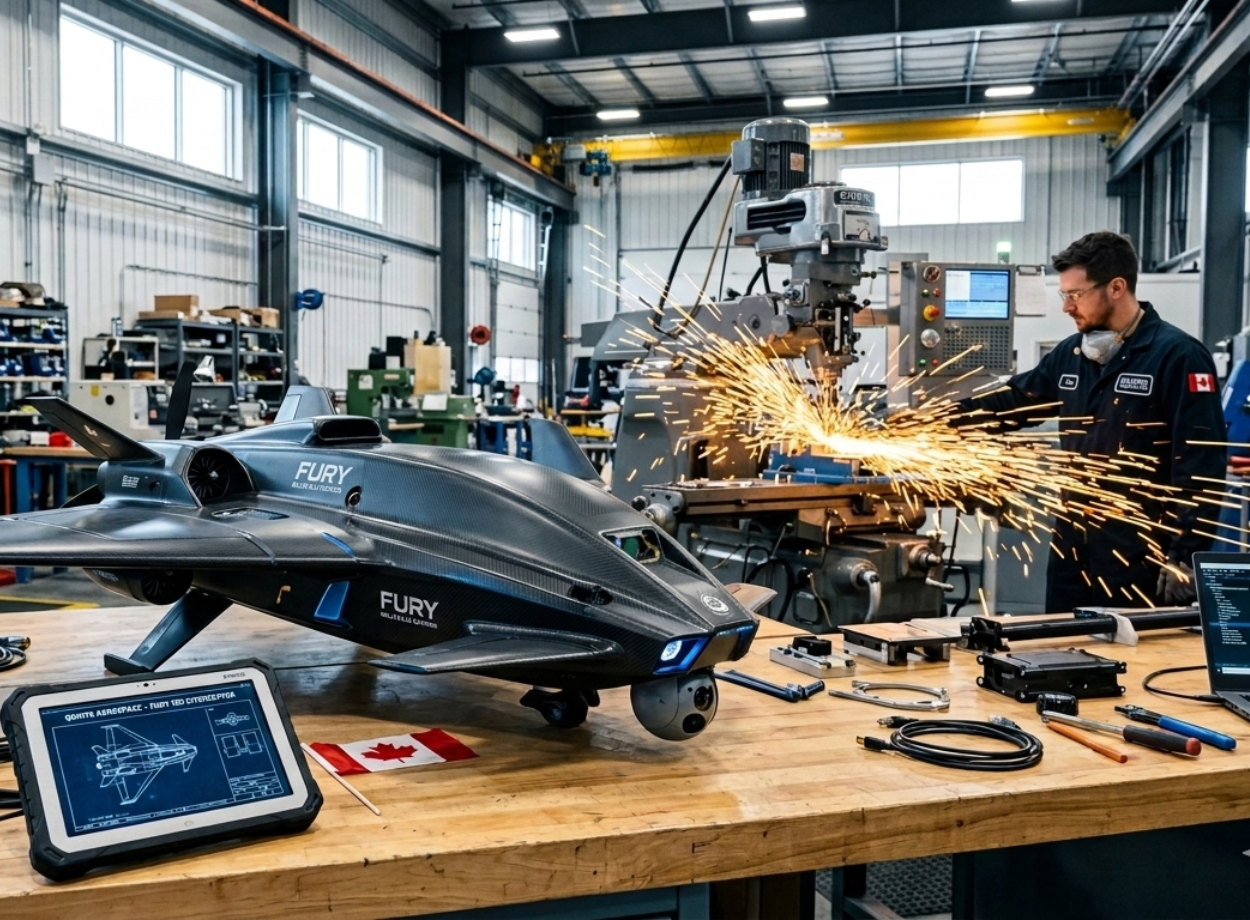
Look at ALM Meca as the perfect case study. They are a small 17 person precision machining company in France. They built the Fury 120 interceptor drone completely under the radar.
They bootstrapped the whole thing with zero initial government funding or venture capital. They kept their intellectual property and moved at their own pace. Their genius move was using custom precision machined micro turbojets. These are engines popularized by remote control jet hobbyists rather than expensive military hardware. They focused on pure speed to defeat cheap loitering munitions. The drone hits 700 kilometers per hour and they built it in under a year.
Garage tinkerers and local machine shops are the new defense contractors. Being outside the prime contractor system gives small companies a massive advantage. They can embrace radical low cost thinking that huge defense giants simply cannot execute quickly.
Translating the Model The Quinte Region and the Local Loop Advantage
We can do this right here in Ontario. The Quinte region and Belleville are manufacturing powerhouses. We have serious advanced manufacturing sectors with strong machining electronics and materials supply chains. We also have great innovation resources at places like Loyalist College.
Belleville is a sleeping giant of advanced manufacturing just waiting for tech startups to knock on the door. We need to create a local loop. Imagine an agile aerospace startup teaming up with a Belleville manufacturing shop. Instead of waiting years for a massive prime contract they build a high performance prototype fast and locally. They use modified high tech or hobby tech components just like ALM Meca.
Actionable Steps for Quinte Entrepreneurs
Here is the playbook for Quinte entrepreneurs.
First, identify the niche. Focus on specific sub problems. Build secure data links for existing drones or ruggedized edge sensors.
Second, build the agile consortium. Match local tech talent with local manufacturing capacity.
Third, minimize dependence and maximize speed. Bootstrap a minimum viable product to prove your capability before chasing massive funding.
Fourth, target the shared labs. Use your local prototype to prove you have what it takes and then plug into the Calian shared lab network for final validation instead of waiting for a general contract.
Seizing the Sovereign Opportunity
The Calian funding provides the access. ALM Meca proves outsiders can win. Quinte manufacturing is ready to deploy. Defense innovation is a sprint right now and the biggest barrier is a slow mindset rather than a lack of capital. Quinte operators have the tools to build sovereign Canadian defense tech and completely change the game.
What do you think? Are local innovators ready to bypass the red tape and start building? Can Belleville become the next hub for agile defense tech?
Business
Stop Grinding Alone: The Secret Support Network for Quinte Business Owners
TL;DR: Starting a business in the Bay of Quinte doesn’t have to be a solo grind. Our region offers a “one-stop shop” at the Quinte Business Development Centre and other dedicated local partners to provide everything from micro-grants to industrial scaling support.

A Local Entrepreneur’s Guide to the Bay of Quinte Support System
Starting a business in Belleville or the County can feel like a solo mission. That “lone wolf” energy might fuel your late-night hustle but it is often a fast track to burnout. The reality is that the Bay of Quinte region sits on a goldmine of resources that most Ontario entrepreneurs would envy. We have a literal “one-stop shop” at the Quinte Business Development Centre that acts as a cheat code for local growth.
If you are trying to do everything yourself you are likely leaving money and mentorship on the table. Here are the five partners you need in your phone right now.
1. The Strategy Partner: The Small Business Centre (SBC)
Think of the SBC as your business therapist and coach rolled into one. They are the first stop for anyone asking how to actually turn an idea into a reality.
- The Goods: They offer free one-on-one counseling that helps you stop guessing.
- The Hook: The Starter Company Plus program is legendary around here for providing micro-grants that move the needle.
- Next Gen: They even run the Summer Company program for student bosses.
2. The Funding Partner: Trenval & PELA CFDC
Big banks can be cold and they often hate risk. Trenval and PELA CFDC are Community Futures Development Corporations that actually care about local community impact.
- The Vibe: They look at the person and the community benefit rather than just a credit score.
- Flexibility: They offer loans for startups and expansions when traditional lenders say “not yet”.
- Focus: They often have specific financing for youth or women entrepreneurs which is a total game changer.
3. The Growth Partner: Quinte Economic Development Commission (QEDC)
When you are ready to stop being a “small” business and start being a “big” player the QEDC steps in.
- Talent: Their Work in Quinte initiative helps you find the local rockstars you need to hire.
- Scaling: They focus on the industrial and manufacturing backbone of the region.
- Space: If you need land or a massive facility they are the ones with the keys to the kingdom.
4. The Community Partner: Local Chambers of Commerce
The Chambers in Belleville, Quinte West, and PEC are your social lifeline.
- The Tribe: Their networking events are where the real deals happen.
- Voice: They handle the boring political advocacy so you can focus on your craft.
- Credibility: Having that Chamber decal in your window signals to local customers that you are a legitimate part of the community fabric.
5. The Specialized County Partner: PEC Economic Development
The County is a different beast with specific rules and a heavy focus on tourism.
- Zoning: They help you navigate the municipal red tape that can kill a project.
- Support: They equip entrepreneurs with the data needed to evaluate opportunities for expansion or request loans.
- Focus: This is the go-to for anyone in hospitality, arts, or agriculture looking to make it in PEC.
The “hustle culture” narrative tells us that asking for help is a sign of weakness. In the Bay of Quinte that mindset is actually a competitive disadvantage. Why struggle with a business plan for three weeks when the SBC can help you polish it in an afternoon?
Our region’s biggest strength is its interconnectedness. Most of these offices are literally in the same building at Loyalist College. We should be leaning into the “Small Town, Big Support” angle. My take is that the “Starter Company Plus” grant is the most underutilized tool in our region. We need to encourage more people to stop gatekeeping their own ideas and start talking to these experts.
The Pro Tip: Reach out when things are going well. If you wait until you are in a crisis to call Trenval you are already behind the eight ball. These organizations want to fuel your rocket ship not just fix your flat tire.
How to Start: Go to a Small Business Centre workshop this month or hit up the next Chamber networking night. Just show up.
Join us on X and Facebook to share your thoughts.
Sources
- Small Business Centre: http://smallbusinessctr.com
- Trenval CFDC: trenval.ca
- PELA CFDC: pelacfdc.ca
- Quinte Economic Development Commission: quintedevelopment.com
- Prince Edward County Economic Development: thecounty.ca/business
- Belleville Chamber of Commerce: bellevillechamber.ca
- Work in Quinte: workinquinte.ca
- Quinte West Chamber of Commerce: quintewestchamber.ca
- Prince Edward County Chamber of Commerce: pecchamber.com
- Quinte Business Development Centre: qbdc.ca




Unlocking the Canadian Defence Sandbox: How Quinte Innovators Can Use Speed and Local Muscle to Scale
TL;DR: Global defense is moving faster than government bureaucracy. The new Calian 100 million shared lab network gives Canadian startups...


The Ancient Superhighway: How a Tropical Drink Reached the Bay of Quite 2,000 Years Ago
TL;DR: Discover how 2,000-year-old pottery found in the St. Lawrence River reveals a massive prehistoric trade network. Ancient residents of...


From Trenton to Torino! The Quinte Skater Ready to Shock the World
TL;DR: Trenton’s Trennt Michaud has finally hit the Olympic ice in Italy with partner Lia Pereira. After a career-defining pivot...

How Rented Equipment Can Bankroll Your Belleville Summer
TL;DR: Spring has sprung in the Quinte region and homeowners are desperate to fix their messy yards. We break down...


Stop Grinding Alone: The Secret Support Network for Quinte Business Owners
TL;DR: Starting a business in the Bay of Quinte doesn't have to be a solo grind. Our region offers a...
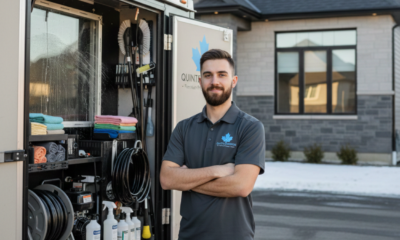

How to Get Free of the 9 to 5 and Get Rich From Common Chores
TL;DR: This step-by-step guide breaks down how to ditch the grind and build a high-revenue service empire in your own...


The latest inductees into the Order of Canada has been released. We take a look at past Bay of Quinte inductees.
TL;DR: The 2026 Order of Canada inductees include pop culture icons like Nardwuar alongside Bay of Quinte legends who have...


6 Predictions for 2026: The Death of Job Hugging and the Rise of the Portfolio Professional
TL;DR: The Canadian dream is getting a massive update as we enter 2026. The traditional 9-to-5 is officially a legacy...


Is your Bay of Quinte property subject to Cowichan-style “clouded title”?
TL;DR: "Cowichan-style" property revolution could hit Ontario, specifically targeting the Bay of Quinte. For local homeowners and investors, the gold-standard...