
Featured
Is This the End of Trump’s Trade War on Canada?
TL;DR: The U.S. Supreme Court just heard arguments on the legality of President Trump’s sweeping “emergency” tariffs. While Canada isn’t the primary target the fallout affects us directly. Our economic fate currently rests with nine American judges rather than our own trade negotiators.

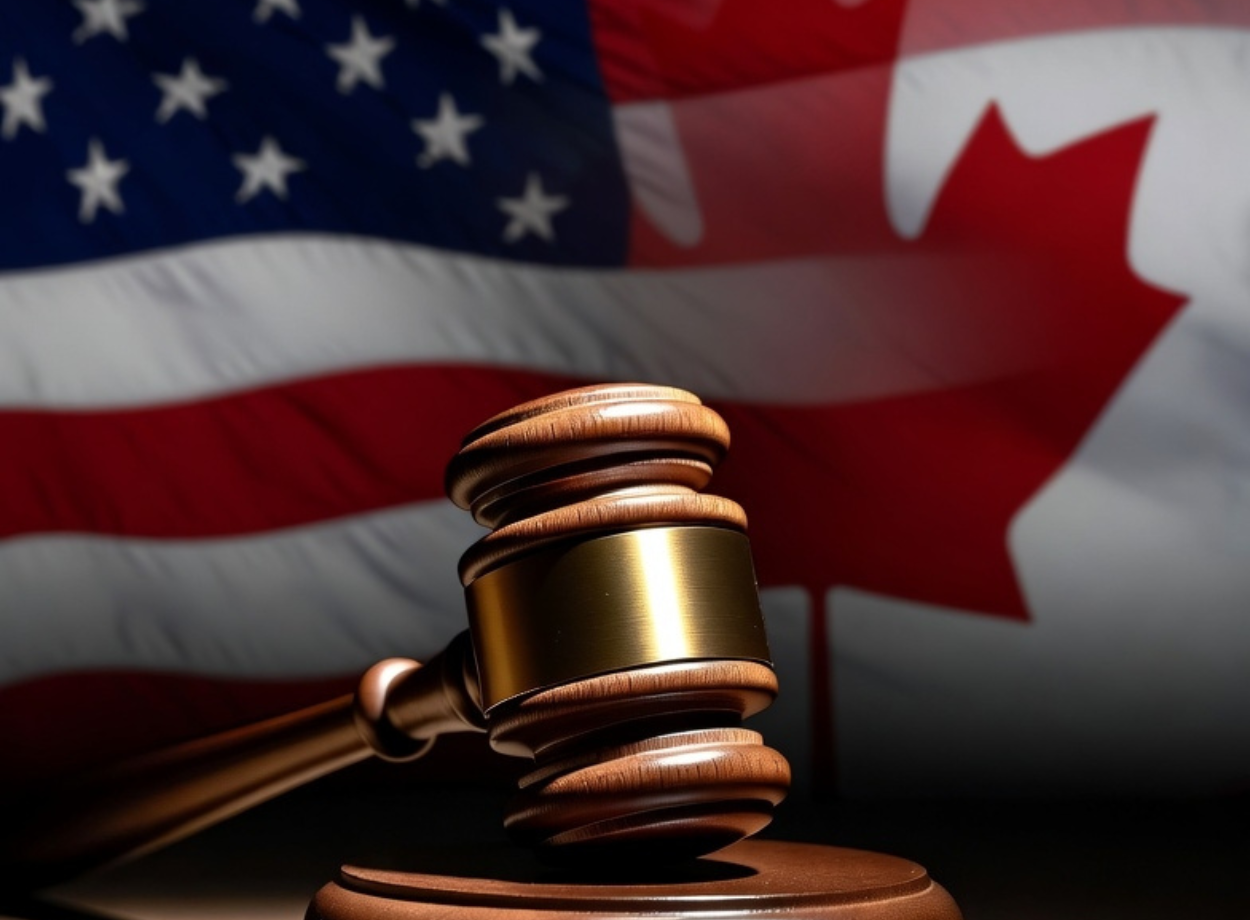
It is November 2025 and the economic anxiety in Ottawa is palpable as all eyes turn to Washington. The U.S. Supreme Court has just heard oral arguments in the historic case that will determine if President Trump’s “emergency” universal tariffs are actually legal. We are living in a strange timeline where Canada’s economic fate rests not in the hands of our own tenacious negotiators but on the nuanced interpretation of a 1977 American statute by nine foreign judges.
In a timely discussion featured on The Hub podcast this week UBC constitutional law expert Geoffrey Sigalet broke down this high-stakes gamble. The core of the issue is President Trump’s aggressive use of the International Emergency Economic Powers Act (IEEPA). He has used this act to impose sweeping tariffs by claiming that chronic trade imbalances and border security issues like the fentanyl crisis constitute a national emergency.
Challengers in the U.S. argue that their Constitution explicitly grants Congress the power over tariffs and trade. They claim the President cannot simply seize that power by declaring an emergency under a law that does not even use the word “tariff” in its text.
Reports from the courtroom today suggest the conservative-majority court is skeptical of Trump’s broad interpretation of his powers. This is the rich irony of our current situation. Canada might be saved by the very conservative legal movement that Trump helped build because legal conservatives often hate executive overreach more than they love partisan policy wins.
If the Court sides with the President it cements a new reality where crippling American protectionism can be deployed on a whim. If they side with the challengers it could mean a massive and immediate rollback of these damaging duties.
While we wait for a ruling we have to ask ourselves some hard questions about how we got here.
Why is our national economic strategy so fragile that it can be derailed by one man’s creative interpretation of a forty-year-old emergency law? And why are we reduced to cheering from the sidelines for American judges to do the heavy lifting our own diplomats could not manage?
Join us on X and Facebook to share your thoughts.
SOURCES
- The Hub (Podcast): ‘Bet against the president winning’: Could an American Supreme Court ruling save Canadian trade? featuring Geoffrey Sigalet.
- The Guardian (Live News Blog): Trump news at a glance: supreme court examines president’s global tariffs.
- CBS News (Article): Supreme Court justices seem skeptical of Trump’s sweeping tariffs.
- Chatham House (Analysis): Trump’s tariffs face Supreme Court challenge that could have significant consequences for presidential power.




Business
How Rented Equipment Can Bankroll Your Belleville Summer
TL;DR: Spring has sprung in the Quinte region and homeowners are desperate to fix their messy yards. We break down how to launch three income streams in Belleville using rented gear and smart capitalism. A single swipe of your credit card at the local rental counter is all it takes to unlock a high-profit summer business.
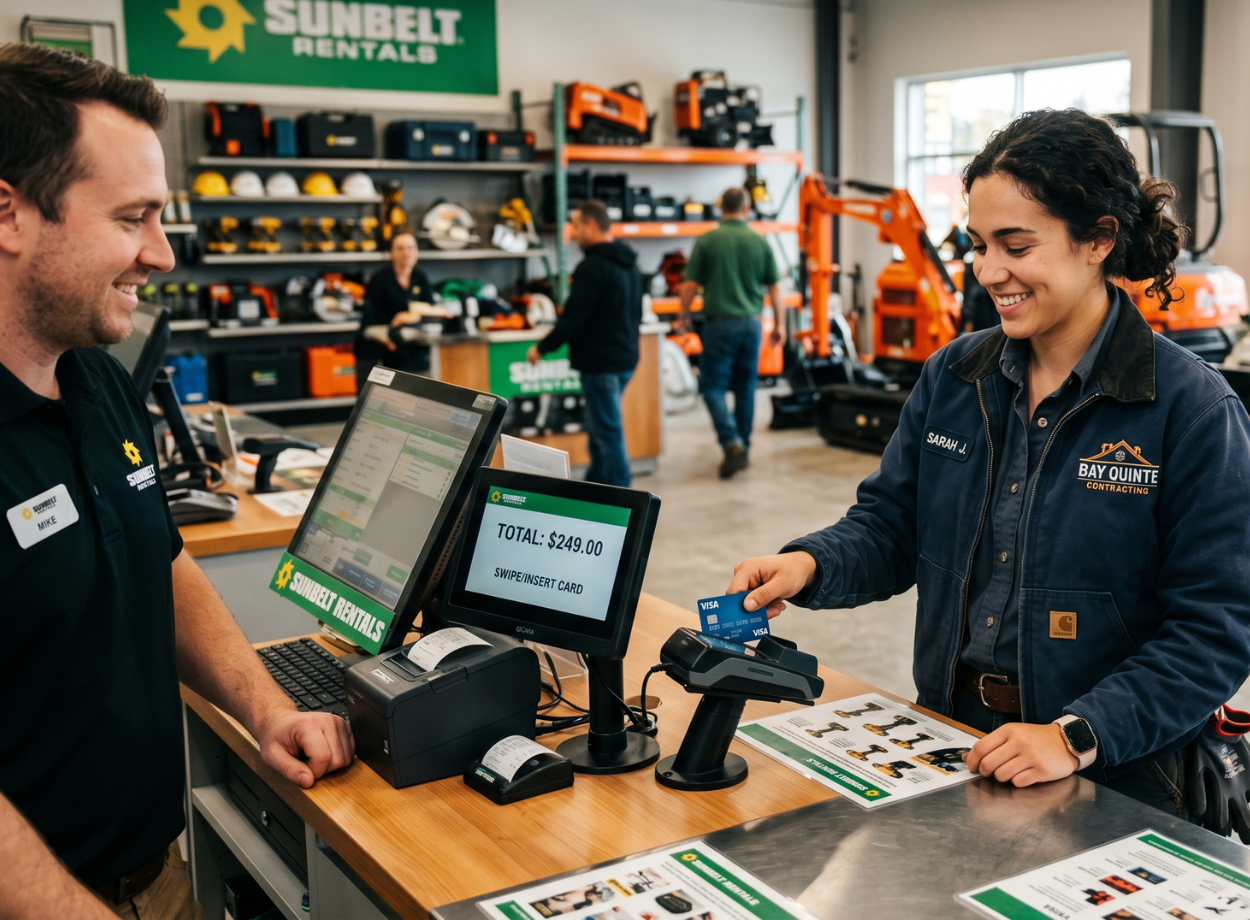
The Quinte region is finally thawing out and property owners are panicking about their messy yards. Belleville homeowners are desperate for reliable people to clean up the winter wreckage and prep their spaces for summer. You do not need a massive business loan to start cashing in on this demand. You just need a driver’s license, a solid work ethic, and a quick trip to Sunbelt Rentals on Enterprise Drive or the Home Depot tool desk on Bell Blvd. By renting equipment you can launch revenue streams with zero long-term commitment. Renting is the ultimate hack for testing a business idea and allows you to close deals before ever investing a dime.
1. Sustainable Scrap Hauling and Yard Clean Up
How to start Rent a pickup truck or an enclosed utility trailer for the weekend. Local spots like Battlefield Equipment Rentals often have daily or weekend rates that let you maximize a short window of work. Grab some heavy-duty garbage bags, gloves, and a reliable rake to compliment your rental.
The Modern Edge Give your business a modern edge by being an eco-warrior. Properly sorting scrap metal and green waste for local recycling centers instead of hitting the landfill makes you stand out. People love paying a premium when they feel good about where their junk is going.
Scaling up Join local Quinte and Belleville community groups on Facebook and post photos of the exact trailer you rented. Offer a flat rate for removal. You will know it is time to pivot when you are turning down jobs because you cannot make it to the dump fast enough. At that point hire a helper from to handle the heavy lifting while you focus on quoting and closing.
2. Viral-Ready Stump Grinding
How to start Rent a walk-behind stump grinder. These machines are absolute beasts and very intimidating to the average homeowner. Pick one up from a local rental yard and spend an hour practicing on a soft stump on your own property or offer the service for free to get the mechanics down safely.
The Marketing Hack Stump grinding is the king of oddly satisfying content. Film the process for TikTok or Instagram Reels. These videos go viral constantly and serve as free local marketing. Drive through older Belleville neighborhoods like the East Hill and look for freshly cut trees. A simple flyer or a viral video link can secure a lucrative contract.
Scaling up The moment the rental fees start eating into more than thirty percent of your monthly profits you need to finance your own commercial grinder. Once you own the equipment reach out to local tree-cutting services in Hastings County that do not offer grinding. You can easily become their dedicated subcontractor.
3. Premium Pressure Washing and Restoration
How to start Head to the local tool rental desk and grab a commercial-grade pressure washer with a surface cleaner attachment. The surface cleaner is the secret weapon because it blasts driveways evenly and in half the time of a standard wand.
The Profit Secret Pressure washing is basically printing money if you understand chemical treatments. Moving beyond just water into soft-washing with eco-friendly soaps allows you to charge double what an amateur charges. It elevates the service from a chore to a premium property restoration. Use a QR code on a lawn sign while you work to capture leads from curious neighbors.
Scaling up Level up when you are booking back-to-back jobs and the physical fatigue of dragging rented hoses limits your output. Build a custom rig by mounting your own high-gallon washer in a truck or van with a dedicated water tank. This cuts setup time to minutes and lets you take on bidder commercial jobs.
Renting equipment is the ultimate cheat code to start a lucrative business in Belleville this season. You get immediate access to professional tools without the terrifying overhead and stress of ownership. Stop scrolling and start scaling.
Which of these three side hustles fits your vibe the best? Are you ready to grab your wallet and start scaling this summer?
Featured
Is your Bay of Quinte property subject to Cowichan-style “clouded title”?
TL;DR: “Cowichan-style” property revolution could hit Ontario, specifically targeting the Bay of Quinte. For local homeowners and investors, the gold-standard “fee simple” deed is evolving into a model of shared jurisdiction. With the Culbertson Tract and Surrender 24 claims casting a shadow over Deseronto and Tyendinaga, residents face a future where land titles are permanently clouded, making property rights a collaborative—and complicated—process.

For decades, property owners in Ontario operated under a comfortable legal assumption. They believed that once the Crown granted a deed to private land, any underlying Aboriginal title was extinguished. However, a recent Bay of Quinte Land Claims Analysis highlights how a series of landmark legal shifts in British Columbia have shattered that certainty. Rulings regarding the Cowichan Tribes and the Haida Nation suggest that Aboriginal title and private property can coexist. As these legal precedents ripple across Canada, residents in Ontario are asking if the Bay of Quinte region is next.
In British Columbia, the Cowichan Tribes claim led to a revolutionary legal acknowledgement. The courts found that land never formally surrendered via treaty remains subject to Aboriginal title even if private homes and municipal infrastructure now sit upon it. This created a “clouded title” scenario where the First Nation holds a legal interest in the land alongside the private owner. For the youthful entrepreneur who relies on land value for business loans, this is a direct threat. Uncertainty is the ultimate enemy of investment, and “clouded titles” effectively act as a regulatory tax on the next generation. The provincial government must provide absolute financial guarantees to deed holders to maintain economic stability, or risk stifling the very growth Ontario needs.
To determine the susceptibility of the Bay of Quinte, we must look at the starting line of the law. Most of British Columbia is unceded land. In contrast, the Bay of Quinte is Treaty Land governed by the Simcoe Deed of 1793. Because a treaty exists, the legal battle in Quinte is about breach of contract rather than proving title from scratch. The Mohawks of the Bay of Quinte (MBQ) argue that the Crown illegally took or sold off portions of their treaty land without proper consent. This creates a “two-driver” system of shared jurisdiction that complicates the Canadian identity of “one law for all.” A unified regulatory environment is essential to ensure Ontario remains competitive on a global scale, yet we are drifting toward a fragmented legal landscape.
Flashpoints like the Culbertson Tract and Surrender 24 make the region a prime candidate for legal tension. The Culbertson Tract claim includes much of the Town of Deseronto. While a portion was settled in 2022 through a federal purchase, hundreds of acres remain under claim. Surrender 24 involves roughly 33,000 acres where the MBQ assert that an 1820 surrender was fraudulent. While Ontario has historically used a “Willing Buyer, Willing Seller” model, this slow-motion remedy creates an economic “limbo” that devalues property while the Crown takes years to act. It is a market-friendly theory that, in practice, leaves individual owners caught in the crossfire of 200-year-old disputes.
The probability of a Cowichan-style situation in the Bay of Quinte is moderate to high. While residents are unlikely to face the loss of their homes, they are highly susceptible to a future of shared jurisdiction. The legal trend in Canada is moving away from winner-take-all property rights and toward a model where Indigenous title survives the issuance of private deeds. The era of absolute fee simple certainty is likely over. The region is entering a period of “reconciliation property rights” where the Simcoe Deed and private property deeds will have to learn to live side by side.
Is your backyard truly yours if the title is “clouded” by a 200-year-old contract dispute? How can the next generation of Canadian homeowners find security in an era of “shared jurisdiction”?


In Alberta, an altercation on a golf course this summer led to a former NHL player getting a beer named after him.
Nick Tarnasky, a former professional fighter and enforcer for teams like the Tampa Bay Lightning and Florida Panthers, found his on-ice skills useful on the links.
The incident occurred at the Alberta Springs Golf Resort in Red Deer. The issue was slow play. A video went viral showing Tarnasky arguing with another golfer, Trevor Ogilvie. The video shows Ogilvie charging at Tarnasky, who then throws him into a water hazard. Ogilvie gets out and re-engages, receiving a couple of swift punches for his trouble.
The video quickly gained online attention. Calgary’s Common Crown Brewing Co. created a limited-edition brew called “The Tarnasky,” a “smooth-hitting IPA,” which sold out almost immediately.
Ogilvie later posted an apology video on Facebook, admitting he “played 36 holes of golf, drank way too much, and my mouth ran faster than my brain.” The RCMP were called, but no charges were laid.
Join us here on X or here on Facebook to comment on this article.




Unlocking the Canadian Defence Sandbox: How Quinte Innovators Can Use Speed and Local Muscle to Scale
TL;DR: Global defense is moving faster than government bureaucracy. The new Calian 100 million shared lab network gives Canadian startups...

The Ancient Superhighway: How a Tropical Drink Reached the Bay of Quite 2,000 Years Ago
TL;DR: Discover how 2,000-year-old pottery found in the St. Lawrence River reveals a massive prehistoric trade network. Ancient residents of...


From Trenton to Torino! The Quinte Skater Ready to Shock the World
TL;DR: Trenton’s Trennt Michaud has finally hit the Olympic ice in Italy with partner Lia Pereira. After a career-defining pivot...


How Rented Equipment Can Bankroll Your Belleville Summer
TL;DR: Spring has sprung in the Quinte region and homeowners are desperate to fix their messy yards. We break down...


Stop Grinding Alone: The Secret Support Network for Quinte Business Owners
TL;DR: Starting a business in the Bay of Quinte doesn't have to be a solo grind. Our region offers a...


How to Get Free of the 9 to 5 and Get Rich From Common Chores
TL;DR: This step-by-step guide breaks down how to ditch the grind and build a high-revenue service empire in your own...


The latest inductees into the Order of Canada has been released. We take a look at past Bay of Quinte inductees.
TL;DR: The 2026 Order of Canada inductees include pop culture icons like Nardwuar alongside Bay of Quinte legends who have...


6 Predictions for 2026: The Death of Job Hugging and the Rise of the Portfolio Professional
TL;DR: The Canadian dream is getting a massive update as we enter 2026. The traditional 9-to-5 is officially a legacy...


Is your Bay of Quinte property subject to Cowichan-style “clouded title”?
TL;DR: "Cowichan-style" property revolution could hit Ontario, specifically targeting the Bay of Quinte. For local homeowners and investors, the gold-standard...